
Opinion
Here I comment on a wide range of issues from education to politics, the arts and more. I welcome lively and opinionated debate, so please leave your comments.
-
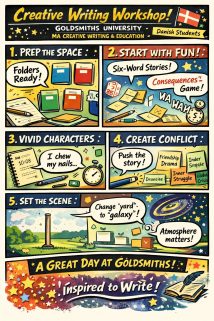
Five Ways to Teach Creative Writing to Teenagers
Forgive the comic strip. It is there simply to convey the energy, playfulness and creative momentum of what was a genuinely joyful afternoon of creative writing at Goldsmiths. Recently we welcomed a brilliant group of Danish teenagers to campus for a creative writing workshop, led by their teacher Margit from DATE and NATE. They arrived full of curiosity, quickly made the space their own, and threw themselves into the session with enthusiasm, laughter and serious thought in equal measure. The workshop was led by three MA Creative Writing and Education students, Niki, Elizabeth and Priyanka, who guided the group through a series of carefully structured but low-stakes activities. From six-word stories and the joyful chaos of Consequences, to thinking about character through one vivid detail, conflict as the engine of story, and setting as atmosphere rather than description, the session offered a clear reminder of what works when teaching creative writing to teenagers. The comic strip gestures towards these ideas in a playful way, but what it really points to is something deeper. Teenagers being welcomed into a university. Future teachers developing their craft. And young writers discovering that language is something to explore and enjoy rather than fear. A brilliant snapshot of the MA Creative Writing and Education in action.
-
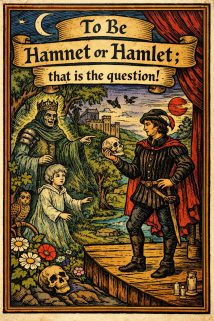
To Be Hamnet or Hamlet; that is the question — Seven lessons I learnt from watching Hamnet
To Be Hamnet or Hamlet; that is the question Seven lessons I learnt from watching Hamnet NB: This review contains spoilers. What if Hamlet is not just a tragedy about revenge, but an unfinished conversation with grief? I watched Hamnet at my local cinema, Crouch End Picturehouse, and came away unsettled, moved, and intellectually provoked. I taught Hamlet for A level English for years and thought I knew the play inside out. This film quietly dismantled that confidence, not by claiming new facts, but by offering a bold emotional reading and asking the viewer to live inside it. The premise is historically sound. Shakespeare’s son Hamnet died aged eleven in 1596; Hamlet was written several years later. What the film explores is what can never be proven, how grief might echo, displace itself, and reappear through art. From Anne Hathaway’s embodied mourning, to forests that seem to think alongside human loss, to the suggestion that Hamlet functions as a kind of family therapy, this is a film that invites big questions. I ended up getting seriously drawn in, researching grief theory, psychoanalysis, family systems, authorship, and early modern ideas of selfhood. Freud sits alongside contemporary bereavement research; Shakespeare studies meet post Covid loss. You will not read a better informed blog on this film. This is a flawed, troubling, and genuinely thought provoking piece of cinema. Shakespeare specialists may wince; others may cry; some people walked out. I recommend it with curiosity rather than reverence. If you’re interested in how stories allow us to enter difficult emotional spaces without explaining them away, this one is for you. If you’re reading this on Instagram, please paste the link into your browser to access the full article.
-
Free Human Givens Therapy Sessions, A Practical and Supervised Offer
I’m currently offering a small number of free Human Givens therapy sessions as part of the final stage of my professional training. This is a practical, solution focused approach that does not require you to talk about childhood trauma unless you want to. The work is often closer to coaching and focuses on challenges you are dealing with now, such as anxiety about work or money, relationships, confidence, or feeling stuck or overwhelmed. All sessions are confidential, ethical, time limited, and fully supervised by an accredited and registered Human Givens therapist. You can read more about my background, training, and approach, including an FAQ, here: https://www.francisgilbert.co.uk/therapy/ If you are interested, please email me at sir@francisgilbert.co.uk . I will reply personally and in confidence.
-
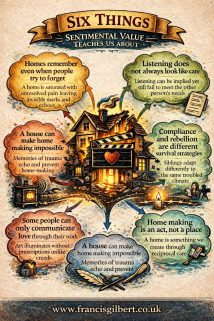
Six Things I Learnt About Home Making from the Film Sentimental Value
Six things we can learn about home making from Sentimental Value What if home is not a place at all, but something we make moment by moment with other people? In Joachim Trier’s Sentimental Value, a Norwegian house becomes a vessel for memory, trauma, silence, and art. The film asks difficult questions about listening, inheritance, history, and how families survive when love is expressed imperfectly or too late. This piece reflects on six lessons about home making drawn from the film, from the way houses remember what people try to forget, to why care cannot be reduced to attentiveness alone, and how home may ultimately be created through reciprocal understanding rather than walls or ownership. The concept map above distils these ideas visually. Read the full blog here: www.francisgilbert.co.uk If you’re reading this on Instagram, please paste the link into your browser to access the full article.
-
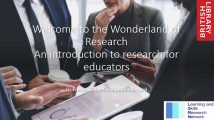
7 Ways For Teachers to become Researchers
In December 2025, I delivered an online session for FE lecturers as part of the British Library Research Network, working with Debbie Bogard of the British Library. We explored seven things every teacher should know about research, using the original Alice in Wonderland manuscript as a metaphor for how inquiry really works. Research is never perfect or polished. It is exploratory, creative, full of revision and curiosity, just like a teacher’s everyday practice. We introduced practical ways to develop a research question, map its key ideas, choose an appropriate methodology, evaluate the credibility of data, and create a meaningful literature review. We also encouraged lecturers to think about more imaginative forms of sharing findings, including podcasts, infographics and multimodal projects. Examples from the Parklife project showed how creative participatory research can have a significant impact on communities and young people. The central message of the session was that research is an act of professional courage. It is not reserved for academics. With the support of the British Library Research Network, FE educators can shape their own inquiries, strengthen their critical thinking, and generate new knowledge that benefits learners and the wider sector.
-
Honouring the Humanity of an Exceptional Student: Zhe Wang
The conclusion of the trial into the tragic death of Zhe Wang has brought renewed sadness to our community, but it also reminds us of the importance of remembering who she was beyond these events. Zhe was a gentle, attentive presence on the MA Creative Writing and Education, someone whose calmness and kindness shaped the spaces she entered. Her writing revealed a rare sensitivity to nature, stillness, and the quiet movements of thought, offering readers a way to slow down and reconnect with the world. Her classmates honoured her with great care, gathering her poems and prose into a beautifully produced anthology that reflects both her creativity and the affection she inspired. As we commemorate her, we hold close her humanity, her thoughtful way of being, and the luminosity of her work. Through her words and through our remembering, Zhe’s presence continues to shine.
-
Five Things We Should Know About Irish Identity Abroad
In this Mindful Learning podcast, Francis Gilbert talks with MA Creative Writing and Education graduate Conor Patchell about his remarkable dissertation film on Irish identity abroad. Conor reflects on the stories he inherited from his grandfather about discrimination in England, the resilience of earlier generations, and the dramatic shift from suspicion to celebration that Irish people have experienced over seventy years. He explains how today’s warmth towards Irish culture rests on the labour, humour, and decency of migrants like Ann, Patsy, John, and Vincent, whose voices shape his film. Conor describes his own experience as “a popular immigrant” and speaks with gratitude about those who “paved the way for us”. This extract gives readers a glimpse into a deeply mindful exploration of migration, memory, and belonging. If you are reading this on Instagram, please paste the link into your browser to access the full article.
-

The Healing Dance: Human Givens, Catharsis, and the Power of Stories
After more than thirty years of teaching, writing, and listening to people share their work and their worries, I’ve come to believe that stories don’t just entertain or instruct us; they heal us. In this post, I explore how narrative and imagination can restore emotional balance, drawing on my recent training in the Human Givens approach to therapy. During one of my training sessions, I worked with a woman I’ll call Anna, a dance teacher who had been sidelined by a younger colleague. I invited her to relax and told a simple story about a dancing queen who built a palace of movement and joy. When a former pupil tried to claim the palace as her own, the queen didn’t fight, she danced again. Her rhythm filled the hall and reminded everyone where the music had begun. As Anna listened, tears came — not from distress, but from recognition. The story acted as a mirror, reflecting her creative worth back to her. It wasn’t interpretation that healed her, but the moment when the story met the truth she’d carried inside all along. From Aristotle’s notion of catharsis to modern neuroscience and the Human Givens idea of “raising the emotional template,” this post explores how guided story and metaphor can help us complete interrupted stories, transforming chaos into coherence. When we re-story our experiences with compassion, the body listens, and healing begins.
-
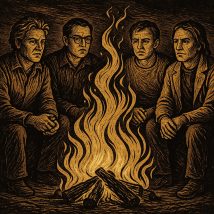
If I Were to Hold a Retreat for Entitled Men
🔥 If I were to hold a retreat for entitled men, I’d start with a fire. Kelly Reichardt’s The Mastermind (2025) burns with quiet devastation. It’s not a heist film but a parable — a portrait of what happens when unmet needs twist imagination into delusion. Drawing on the Human Givens approach and ideas from The Mindful Creative Writing Teacher (Gilbert, 2024), this reflection explores how men lose themselves when creativity serves ego rather than empathy. Read the full essay: The Mastermind: A Parable for Entitled Men and the Search for Meaning 🕯️ For teachers, therapists, and fathers alike, it asks one question that lingers long after the flames fade: What is it you really need? WARNING: This post contains plot spoilers for the film, The Mastermind (2025)!
-
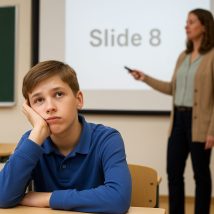
Five Things the New Are You on Slide 8 Yet? Report Can Teach Us About Learning in Schools
In this new episode of the Mindful Learning Podcast, I speak with Dr Sarah Pearce and Dr Anna Traianou about their powerful new report for the National Education Union, Are You on Slide 8 Yet?. The title comes from one teacher’s chilling experience: senior leaders checking through classroom doors to ensure every class was on the same PowerPoint slide. This report reveals how standardised curricula—ready-made lessons and scripts—are reshaping education across England, limiting both teacher autonomy and pupil creativity. As Dr Pearce explains, “If the children didn’t understand it, it almost didn’t matter. We had to keep going.” Teachers described feeling like “a warm body in front of the class,” stripped of professional judgement. Professor Traianou adds, “Teachers who used standardised curricula reported a reduced sense of decision-making and agency… and contrary to assumptions, no difference in workload.” The findings show that both teachers and pupils are losing opportunities for autonomy, collaboration, and meaningful talk—core elements of learning that mindfulness in education seeks to protect. We discuss the political roots of this trend, the dangers of AI-driven curriculum tools, and what mindful, human-centred education might look like instead. 🎧 Listen now to the full podcast and read the article: 👉 https://www.francisgilbert.co.uk/2025/10/five-things-the-new-are-you-on-slide-8-yet-report-can-teach-us-about-learning-in-schools If you’re reading this on Instagram, please paste the link into your browser to access the full article. #MindfulLearning #AreYouOnSlide8Yet #FrancisGilbert #Goldsmiths #Teaching #Education #NEU #CreativeEducation #TeacherVoice #MindfulTeaching #Podcast
-
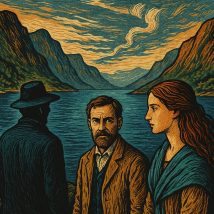
The Lady from the Sea: Five Lessons We’ve Lost in Translation
Simon Stone’s new adaptation of Ibsen’s The Lady from the Sea at the Bridge Theatre, starring Alicia Vikander and Andrew Lincoln, is exquisite and psychologically nuanced — yet something vital has ebbed away. In translating Ibsen’s Fruen fra havet into modern English realism, the production trades myth for therapy, danger for empathy. This article explores five lessons the original still teaches us (about desire, freedom, landscape, symbolism, and voice) and what is lost when we tame the sea into a lake.
-
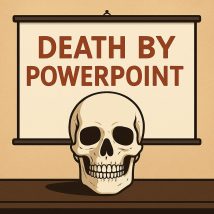
Five Big Wake-Up Calls from the New Curriculum Reports
Two major reports have shaken up the education debate in 2025. The National Education Union’s Are You on Slide 8 Yet? (Traianou, Pearce, Stevenson & Brady, 2025) lays bare the lived realities of teachers trapped in the machinery of standardisation. The government’s Curriculum and Assessment Review: Interim Report (Francis, 2025) goes further than expected, acknowledging deep systemic flaws while hinting at long-overdue reform. These reports land in a time of crisis. Child poverty is rising, teacher pay has stagnated, burnout is escalating, and authoritarian regimes of behaviour management have taken hold in many academies. AI is reshaping classrooms faster than policy can keep up. Together, these forces are eroding teacher autonomy and narrowing the curriculum’s moral and intellectual horizons. This blog identifies five urgent wake-up calls for policymakers. First, the curriculum is failing the children who need it most; inequality is widening. Second, teachers are suffering “death by PowerPoint,” stripped of agency and creativity. Third, workload has not eased; it has intensified under centralised schemes. Fourth, curriculum reform must be guided by dialogue and research, not ideology. And finally, education must equip young people to navigate an uncertain, unequal, AI-driven world. Both reports demand courage and imagination from policymakers. Incremental fixes will not be enough. At Goldsmiths, we are developing models of curriculum design that restore teacher professionalism and creativity, grounded in research-rich, socially just principles. It is time for a new settlement in education, one that trusts teachers, resists authoritarianism, and empowers young people to shape a fairer future. If you’re reading this on Instagram, please paste the link into your browser to access the full article.
-
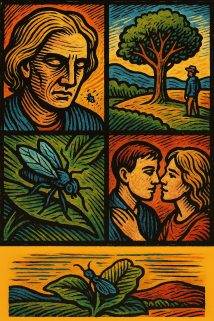
Four things the novels of Patrick White can teach us
Patrick White remains Australia’s only Nobel Prize winner in Literature, yet today his novels are often more admired than read. Fifty years after his Nobel award, critics such as Reuben Mackey (2023) note the curious neglect of a writer who once defined the Australian canon. In this blog I revisit White’s fiction through my own journey with his novels, beginning as a university student wrestling with The Vivisector, and reflect on what they still have to teach us. I focus on four key lessons. First, White’s prose teaches mindfulness: the beauty of fleeting details and the poetry of the present moment. Second, his groundbreaking novel The Twyborn Affair questions rigid gender binaries, anticipating today’s conversations around fluid identity. Third, works like Voss and Riders in the Chariot challenge Eurocentric narratives, offering a decolonising vision of Australian literature. Finally, across his oeuvre White portrays authentic human relationships – complex, flawed, yet profound. This piece blends personal reflection with critical insights, showing how White’s novels remain relevant guides to living thoughtfully, compassionately, and truthfully. Read the full article here: https://www.francisgilbert.co.uk/2024/12/four-things-the-novels-of-patrick-white-can-teach-us/ #PatrickWhite #AustralianLiterature #Mindfulness #Decolonising #CreativeWriting #Books
-
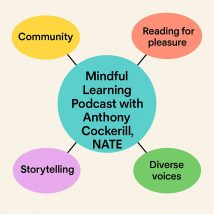
Five Things English Teachers Can Teach Us About Reading, Writing, and Living
I recorded this episode of the Mindful Learning Podcast with Anthony Cockerill, director of the National Association for the Teaching of English (NATE), because I believe English teachers have so much to teach us beyond the classroom. Our conversation was a chance to explore what reading, writing, and language mean for all of us as human beings, not just for students in schools. Anthony spoke passionately about the life-changing power of reading for pleasure, the way writing can help us respond to and reflect on life, and the importance of valuing every community’s language. He reminded me that stories shape who we are and that teaching thrives best in community, not in isolation. These are not just classroom lessons — they are life lessons. I wanted to share this podcast because, at a time when education is often framed in narrow, utilitarian terms, we need to remember the broader value of English. Reading, writing, and language are not luxuries; they are ways of being human, of building empathy, resilience, and imagination. Listen to the full conversation and read the blog here: 👉 https://www.francisgilbert.co.uk/2025/09/five-things-english-teachers-can-teach-us-about-reading-writing-and-living/
-
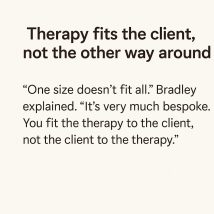
The Mindful Learning Podcast: 7 Things You Should Know About Therapy
If you’re reading this on Instagram, please paste the link into your browser to access the full article. In the latest Mindful Learning Podcast I spoke with therapist Bradley Riddell about what therapy is really like. We explored why therapy is never one-size-fits-all, why humour and trust matter, and how clients often already carry the resources they need. As Bradley told me: “Being in the room, you’re already leading the client to a collaborative venture… If you don’t respect the sanctity of the person sitting in the chair with you, you’ve no business being in the therapist’s chair.” Read the blog “7 Things You Should Know About Therapy” for the full write-up, including Bradley’s insights and references to leading thinkers like Janina Fisher, Carl Rogers, and Aaron Beck.
-
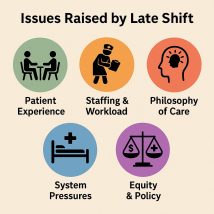
Five Things I Learnt About Life and Death from the Extraordinary New Film Late Shift
I watched Late Shift (Heldin) at the Alnwick Playhouse and left feeling that everyone in the audience had witnessed life and death together. The film follows Floria, a nurse on the night shift in a Swiss hospital, navigating impossible workloads, patients in pain, angry relatives, and small flashes of compassion. It is both realistic and mythic, a kind of modern Inferno. The film made me reflect on how much we ask of nurses, how dying can be managed well or badly, and how much society needs to decide what we truly want to fund in healthcare. Dignity at 3 a.m. should be a public right, not a private upgrade. Read the full blog on my site: www.francisgilbert.co.uk
-
Five things parents should know about helping their children succeed at school
Reflections from my appearance on LBC Breakfast Show, 21 August 2025 This morning I joined LBC’s breakfast show (with a stand-in presenter for Nick Ferrari) to talk about GCSE results day, inequality, and what parents can do to help their children succeed. It was a wide-ranging, challenging conversation that touched on poverty, parental support, and the pressures on teachers. In my blog I’ve shared five key things parents should know: from why home support matters more than class, to how daily routines and resilience make a real difference. I wanted to write this piece to distil what we discussed on air, connect it to the research, and offer something useful for parents navigating the anxieties of results day. You can read the full article here: www.francisgilbert.co.uk If you’re reading this on Instagram, please paste the link into your browser to access the full article. #LBC #GCSEResults #Education #ParentalSupport #Inequality #Teaching #FrancisGilbert #MindfulParenting #ParentingTips
-
Five Things I Learned from watching Kubrick’s Barry Lyndon
Sitting with my 25-year-old son in the Duke of York’s cinema in Brighton, I was transported back to my student days in the 1980s. Watching Barry Lyndon together felt like a full-circle moment. We stayed near Devil’s Dyke, walking its chalk slopes in the evening light, and the film seemed to seep into the landscape around us. I wrote this piece because Kubrick’s film isn’t simply a costume drama, it is a meditation on history, art, and how human life is staged by ritual and chance. Seeing it again reminded me of my tutor at Sussex, John Barrell, whose teaching showed me that people of the 18th century were not “modern” subjects but beings shaped by poverty, class, and tradition. The film captures that difference with extraordinary precision. Revisiting it with my son was moving. He was as mesmerised as I was, proof that cinema can still speak across generations. Writing the blog was my way of reflecting on how light, landscape, and ritual still shape the way we see ourselves.
-

Seven Things I Learnt from Land of the Free? Trump’s War on Press, Protest and Academic Freedom
What does freedom of expression really mean in 2025? On August 5th, I attended a deeply thought-provoking event hosted by Index on Censorship at St John’s Church, Waterloo, where my wife Erica Wagner was one of the speakers. The panel launched the new Index issue titled Land of the Free? and gathered journalists, editors, and activists to reflect on Donald Trump’s legacy and the erosion of civil liberties across the US and UK. From SLAPP lawsuits to the criminalisation of protest, the conversation reminded us that freedom is not a given: it must be defended, questioned, and collectively sustained. This blog distils seven key lessons I took away from the night, ranging from the legacy of the War on Terror to the global assault on so-called “woke” values. #FreedomOfExpression #IndexOnCensorship #LandOfTheFree #ProtestRights #SLAPPs #CultureWars #Democracy #WritersLife #PoliticalWriting #CreativeNonfiction #EricaWagner #FrancisGilbert #HumanRights #SpeakUp #UKPolitics #USPolitics
Five Things I Learnt About Winning from Marty Supreme
What does it really mean to win? I went to see Marty Supreme expecting a sports movie, or at least a film about ambition. What I came away with was something darker and more unsettling. A portrait of winning at all costs, and the quiet wreckage left behind when success becomes the only value left standing. Ping pong is treated with utter seriousness in this film. No irony, no wink. It becomes a lens through which we watch a man climb, dominate, discard, and hollow himself out. Marty wins matches, lovers, money, status. He also abandons people, humiliates himself, and loses any capacity for kindness or care. The film’s greatest strength is its visual world. 1950s Manhattan, the shoe shop, the light, the textures, the labour. These spaces quietly tell a story Marty refuses to hear. Winning lifts him out of community and leaves him alone with his trophies. This blog reflects on five things the film taught me about winning, losing, seriousness, vulnerability, and why ambition without ethics ends up looking absurd rather than heroic. If you are interested in culture, education, masculinity, parenting, or what we teach children about success, this film, and this moment, are worth thinking about. Read the full piece on my website. If you’re reading this on Instagram, please paste the link into your browser to access the full article.