
Non-fiction
-
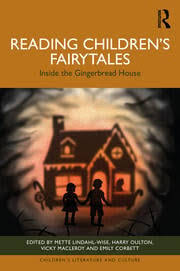
Reading Children’s Fairytales: Inside the Gingerbread House (Chapter)
It’s been a real privilege to contribute to Reading Children’s Fairytales: Inside the Gingerbread House (Routledge), a genuinely collaborative and intellectually generous volume edited by an outstanding team with strong roots in Goldsmiths, University of London. The book is edited by Dr Mette Lindahl-Wise and Dr Harry Oulton, both PhD graduates of Goldsmiths’ Education department, alongside Professor Vicky Macleroy, now Emerita Professor and still a hugely influential presence in the field, and Dr Emily Corbett, Head of the MA in Children’s Literature and a tireless champion of children’s and young adult literature. Their collective vision has shaped a book that is rigorous, creative, inclusive, and genuinely interdisciplinary. The volume brings together leading and emerging scholars, practitioners, and creative writers to explore the enduring power of Hansel and Gretel across children’s and young adult literature, art, and culture. It includes a chapter by Professor Michael Rosen and an introduction by Jack Zipes, widely regarded as the world’s leading authority on fairy tales, setting the intellectual tone for the collection. Across the book, contributors examine retellings of Hansel and Gretel in picturebooks, graphic novels, poetry, YA fiction, sculpture, and Hip-Hop, challenging narrow, hierarchical, and canonical approaches to fairy tales. The result is a rich, dialogic collection that celebrates multiple forms of knowledge, multimodal meaning-making, and culturally responsive approaches to children’s and young adult literature. If you’re reading this on Instagram, please paste the link into your browser to access the full article.
-
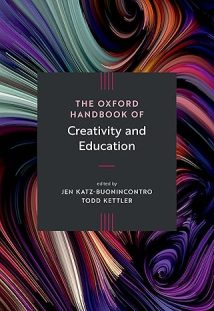
The Oxford Handbook of Creativity and Education (Chapter)
I’m pleased to share that I’ve contributed a chapter to The Oxford Handbook of Creativity and Education (Oxford University Press, 2025), a major international reference work bringing together leading research on creativity in education from across the world. The handbook explores how creativity is understood, supported, and constrained across educational systems, with chapters examining policy, assessment, curriculum, classroom practice, disciplines, and research methods. It is designed for students, researchers, teacher educators, school leaders, and policymakers interested in the future of creativity in learning, teaching, and leadership. My chapter, Using Creative Writing to Fuel Creativity, focuses on the role of creative writing as a core pedagogical practice rather than a marginal or optional one. Drawing on research and my own experience in schools and universities, I argue that creative writing can support creativity across many disciplines, not only English and the arts, but also science, social science, psychotherapy, and research practice. The chapter explores practices such as freewriting, flow-based writing, reflective writing, and my own concept of diagrarting, combining writing, drawing, and dialogue. It also engages critically with assessment, high-stakes accountability, decolonising pedagogy, and the limits of traditional creative writing workshop models. Central to the argument is the idea that how and why we teach creative writing shapes learners’ confidence, agency, and capacity for creative thought. The full chapter is published by Oxford University Press and is copyrighted. I’m able to share a PDF of the final draft (with one figure missing), which contains most of the argument and can be read alongside the published version in the handbook. If you’re reading this on Instagram, please paste the link into your browser to access the full article.
-
The Mindful Creative Writing Teacher
This blog introduces The Mindful Creative Writing Teacher—my book for anyone teaching or facilitating creative writing, whether in schools, universities, prisons, or community spaces. Drawing on decades of experience, I offer a fresh, practical, and compassionate approach to teaching writing that blends mindfulness, creativity, and social justice. In the blog, I explain why I wrote the book: to move beyond rigid workshop models and embrace a more humane, dynamic, and inclusive pedagogy. The book is filled with real-life case studies, poems, hands-on activities, and reflective prompts designed to help you cultivate creativity, wellbeing, and critical thinking in your classroom. It’s for English teachers, creative writing tutors, and writers alike—especially those looking to empower diverse voices, support reluctant or neurodiverse learners, and find joy in their own writing again. You’ll find strategies for teaching storytelling, feedback, decolonisation, and multimodal writing, as well as guidance on developing your own mindful teaching identity. This blog offers a glimpse into the book’s ethos: writing not just as a craft to be perfected, but as a transformative act of attention, empathy, and expression. If you’re looking to teach writing in a way that’s more authentic, creative, and connected, this book—and blog—are for you.
-
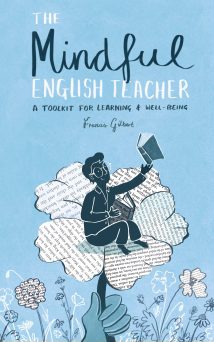
The Mindful English Teacher: A Toolkit for Learning and Well-Being
Mindfulness isn’t mystical—and it isn’t just for monks. Like regular exercise, it’s a simple, powerful practice that helps us work with calm, clarity, and compassion—even in the busy, demanding life of a teacher. The Mindful English Teacher offers a fresh, practical approach to English teaching that centres presence, purpose and play. Whether you’re deep in Shakespeare, tackling pre-1900 literature, guiding students through exam stress, or trying to make grammar meaningful, this book will support you to teach with greater confidence and less anxiety. Drawing on classroom stories, educational research, and years of lived experience, the book is packed with usable ideas, mindful prompts, and rich case studies. At its heart is a compelling contrast between the Mindful English Teacher and the Unmindful one—two vivid teaching personas that show how small shifts in awareness can radically change the learning experience. This is not a book about sitting silently on cushions. It’s a toolkit for making the teaching of English more human, inclusive, and joyful. With strategies for decolonising the curriculum, supporting neurodiverse learners, and reigniting your passion for literature, The Mindful English Teacher is an essential companion for early-career and experienced teachers alike. Because mindful teaching isn’t about being perfect. It’s about being present—and building a classroom culture where everyone can thrive.
-
Working The System: How to Get the Very Best State Education for your Child
Written by an experienced teacher who has established a reputation as a voice of candour and clarity in the world of modern educational doublespeak, this highly readable guide will help you navigate the complexities of the system and get the very best education for your child.
-
Parent Power
The one-stop book for any parent who wants their child to get the most of the British education system.
-
Teacher on the Run
Francis Gilbert has been offered a job in the English department at his old school, a nice suburban comprehensive. He feels like he’s landed in toytown. But how long can Gilbert’s dreamland last?
-
Yob Nation
A devastating look at the state of Britain today – a country being steadily corroded by the advance of yob culture.
-
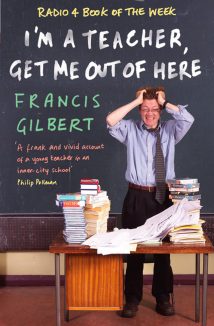
I’m a Teacher, Get Me Out of Here!
The book that tells you the unvarnished truth about teaching. By turns hilarious, sobering and downright horrifying, this contains the information you won’t find in any school prospectus.