
Opinion
Here I comment on a wide range of issues from education to politics, the arts and more. I welcome lively and opinionated debate, so please leave your comments.
-
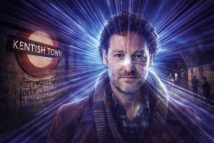
Five Things I Learnt from Tobias Hill’s Writing
I met Tobias Hill in 1999, in a London literary world that felt alive, exploratory, not yet fully digitised. Very different from now in 2026. We stood outside a sealed Underground entrance in Kentish Town, a space that had quietly taken on another life, hidden, ambiguous, charged. Tobias was drawn to it, not for spectacle, but because he was always interested in what lay beneath. That sense of him has stayed with me. In this blog, I reflect on five things his writing taught me, about mystery, the underground, humanity, metaphor, and the unconscious. Hill’s work moves through cities, objects, and histories with extraordinary precision, always searching for meaning within the specific. I’ve also included a digitally generated image of Tobias, a symbolic portrait rather than a literal one. I suspect, slightly ironically, that the Tobias I knew would have found it amusing. He wasn’t po-faced about art or writing, quite the opposite, he was playful, curious, alive to odd juxtapositions. I think he would have laughed, at least a bit. I offer it in that same spirit of playfulness he brought to his work, while also trying to gesture towards something else he captured so well, the uncanny sense that the familiar world is always on the edge of becoming strange. For me, the image became a way of thinking about Tobias as a kind of time traveller, still moving through the underground spaces he wrote about, still connecting with us through his work. He touched many lives, and continues to do so. I really miss him, even though I did not know him that well; I miss his literary presence in particular. This piece is an attempt to honour his humanity and work. Read the full blog here: https://www.francisgilbert.co.uk/2026/04/five-things-i-learnt-from-tobias-hills-writing/
-
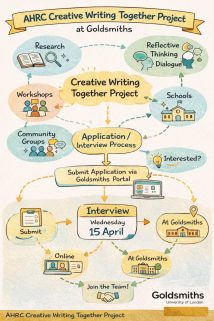
Two New Roles on the AHRC Creative Writing Together Project at Goldsmiths
I’m delighted to be recruiting for two roles on our AHRC funded Creative Writing Together project at Goldsmiths, University of London. The project explores how creative writing can support reflection, wellbeing, and dialogue across generations, working with schools, community groups, and writers across London. We are looking for a Research Assistant (.5 FTE) and a Short Courses and Training Officer (.2 FTE) to join the team from 1 May 2026 to 30 April 2029. Full details, including the job descriptions, are now available on my blog. If you are interested, please send a formal letter of application and CV to me, Dr Francis Gilbert at f.gilbert@gold.ac.uk by Thursday 25 March at 4pm. Interviews will take place 31 March, either online or in person at Goldsmiths, and please state your availability for interview in your application. A formal advert will appear on the Goldsmiths website shortly, but I am sharing details early in case colleagues, doctoral researchers, teachers, writers, or community practitioners may be interested. Do take a look at the blog post and feel free to share it with anyone who might be a good fit.
-

Five Things FE Teachers Can Learn from Small Scale Research
As part of the British Library’s Learning Skills Research Network, Debbie Bogard and I co-led an online Learning and Skills Research Network session exploring research methods and data collection in Further Education. At first I joked that research methods might not be the most thrilling topic. Yet the discussion quickly showed the opposite. When research begins with real classrooms, real teachers, and real learners, it becomes deeply engaging. The session centred on a simple but powerful idea. Small scale practitioner research can generate profound insight. FE classrooms are rich research sites where teachers already observe patterns, dilemmas, and possibilities every day. Research is not something distant or purely academic. It begins with curiosity about practice. Five themes emerged strongly. First, FE classrooms contain valuable knowledge worth studying. Second, the research question matters more than the method. Third, teacher voice is not decoration but a form of data that reveals how systems actually operate. Fourth, ethics sit at the centre of practitioner research because education is fundamentally relational. Finally, research can be empowering. In systems shaped by accountability pressures, inquiry allows teachers to step back, reflect, and understand their work more deeply. The workshop reminded us that practitioner research is not about grand projects. It is about paying attention to practice and learning from it together.
-

Why Creative Writing Together Matters, A £1m Research Project for Families, Schools and Communities
I am delighted to share that Professor Tom Dobson and I, working with an exceptional interdisciplinary team, have secured close to £1 million in funding for a three year research project, Creative Writing Together. This major award supports an ambitious investigation into how creative writing can strengthen relationships between children, parents, teachers and communities, and enhance wellbeing across educational settings. At a time when schools and families are facing rising mental health challenges, increasing absence and deepening inequalities, we are asking a simple but powerful question. What if creative writing were treated not as an optional enrichment activity, but as a relational practice that helps people understand themselves and one another more deeply? The project centres on the concept of reflective functioning, the capacity to make sense of behaviour in terms of thoughts, feelings and intentions. Strong reflective functioning is associated with secure attachment, improved relationships and emotional regulation. Yet creative writing has rarely been studied as a preventative, community based approach to developing these capacities. Over three years, we will run eight week programmes in schools and community centres in London and York, bringing families and teachers together to write collaboratively. Combining action research, psychological measures and close analysis of participants’ writing, we aim to generate robust evidence and practical resources that can inform policy and practice. Creative Writing Together positions writing as a shared, transformative act. In a fragmented educational landscape, it offers a hopeful vision of creativity as connection.
-
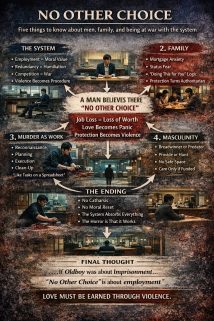
No Other Choice, five things we can learn about men, family, and being at war with the system
I recently watched Park Chan-wook’s No Other Choice, and I cannot stop thinking about it. It is a film that makes you laugh, then makes you question the laughter. In a cinema full of people, there were audible laughs during scenes of murder, not because they were comic in any simple way, but because they were staged with such grim, bureaucratic practicality. The premise is brutally simple. A laid-off paper expert decides to kill his rivals for a job so he can protect his family. What unfolds is not just a thriller, but a devastating portrait of masculinity under neoliberal pressure. When a man’s worth is fused with his wage, unemployment feels like erasure. Love becomes panic. Protection becomes predation. What shocked me most was not the violence, but how easily the system absorbs it. The film suggests that modern corporate life already trains us to think in terms of targets, elimination, competition, survival. If Oldboy was about imprisonment as destiny, No Other Choice is about employment as destiny. It is disturbing, funny, precise, and deeply humane. A film about men, family, and what happens when the system leaves you believing there is no other choice.
-
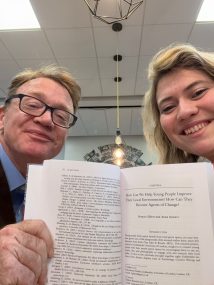
Five reasons to get young people researching their local parks
What happens when we stop seeing young people as a problem in parks, and instead invite them to become researchers, artists and agents of change? This blog, and the chapter it draws on, grows out of the Parklife project, a collaboration between university students, school pupils and local communities. It sets out five reasons why supporting young people to research their local parks matters now. Using creative and participatory methods such as poetry, visual art, film and surveys, the project showed what becomes possible when young people’s insights are taken seriously. Pupils aged eleven to fourteen became co-researchers rather than passive participants. They explored questions of safety, ecology, care and belonging, and presented their findings directly to councillors and park managers. The outcome was tangible change, including improved lighting, better litter management and new community facilities. The research also speaks to wider debates about education, environment and democracy. It challenges deficit narratives about youth, demonstrates the policy impact of creative research, and reimagines parks as classrooms without walls. The article is available open access via the Goldsmiths research repository and is published as a chapter in Ecologies in Practice and Learning: Arts Interventions in the Earth Crisis, situating Parklife within international conversations about socially engaged research and environmental futures. You can read the full copyright-free article here: https://www.francisgilbert.co.uk/2026/02/five-reasons-to-get-young-people-researching-their-local-parks/ Springer book: https://link.springer.com/book/10.1007/978-3-031-82338-1 Goldsmiths repository: https://research.gold.ac.uk/id/eprint/40154/
-
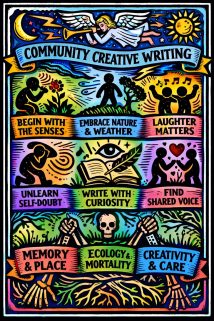
Six ways to engage local communities through creative writing at St Mary’s Church, Walthamstow
St Mary’s Churchyard in Walthamstow is more than a restored historic site. It is a living commons, a place where gardening, conversation, memory, and creativity quietly intertwine. On a January afternoon, we gathered there with students from the MA Creative Writing and Education at Goldsmiths for a community writing session that showed just how powerful local, place-based creative work can be. Led by two MA students, Sophie and Priyanka, the session moved fluidly between sensory attention and playful experimentation. Smell, wind, weather, laughter, discomfort, poetry, and the natural world all became entry points into writing that felt inclusive, serious, and alive. Volunteers and students wrote side by side, discovering that creative confidence grows not through expertise but through permission, attention, and shared experience. What emerged was a practical, replicable model for community creative writing. One that does not demand performance, prizes curiosity over polish, and allows ecological awareness to arise through voice rather than instruction. This post reflects on six key practices from the session, offering ideas for anyone interested in engaging local communities through creative writing, mindfulness, and place.
-
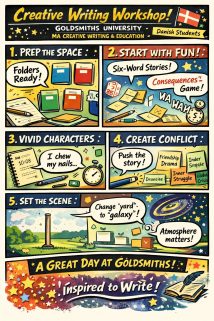
Five Ways to Teach Creative Writing to Teenagers
Forgive the comic strip. It is there simply to convey the energy, playfulness and creative momentum of what was a genuinely joyful afternoon of creative writing at Goldsmiths. Recently we welcomed a brilliant group of Danish teenagers to campus for a creative writing workshop, led by their teacher Margit from DATE and NATE. They arrived full of curiosity, quickly made the space their own, and threw themselves into the session with enthusiasm, laughter and serious thought in equal measure. The workshop was led by three MA Creative Writing and Education students, Niki, Elizabeth and Priyanka, who guided the group through a series of carefully structured but low-stakes activities. From six-word stories and the joyful chaos of Consequences, to thinking about character through one vivid detail, conflict as the engine of story, and setting as atmosphere rather than description, the session offered a clear reminder of what works when teaching creative writing to teenagers. The comic strip gestures towards these ideas in a playful way, but what it really points to is something deeper. Teenagers being welcomed into a university. Future teachers developing their craft. And young writers discovering that language is something to explore and enjoy rather than fear. A brilliant snapshot of the MA Creative Writing and Education in action.
-
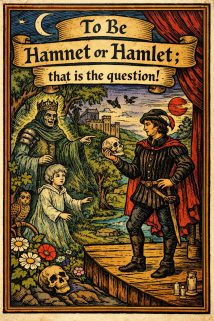
To Be Hamnet or Hamlet; that is the question — Seven lessons I learnt from watching Hamnet
To Be Hamnet or Hamlet; that is the question Seven lessons I learnt from watching Hamnet NB: This review contains spoilers. What if Hamlet is not just a tragedy about revenge, but an unfinished conversation with grief? I watched Hamnet at my local cinema, Crouch End Picturehouse, and came away unsettled, moved, and intellectually provoked. I taught Hamlet for A level English for years and thought I knew the play inside out. This film quietly dismantled that confidence, not by claiming new facts, but by offering a bold emotional reading and asking the viewer to live inside it. The premise is historically sound. Shakespeare’s son Hamnet died aged eleven in 1596; Hamlet was written several years later. What the film explores is what can never be proven, how grief might echo, displace itself, and reappear through art. From Anne Hathaway’s embodied mourning, to forests that seem to think alongside human loss, to the suggestion that Hamlet functions as a kind of family therapy, this is a film that invites big questions. I ended up getting seriously drawn in, researching grief theory, psychoanalysis, family systems, authorship, and early modern ideas of selfhood. Freud sits alongside contemporary bereavement research; Shakespeare studies meet post Covid loss. You will not read a better informed blog on this film. This is a flawed, troubling, and genuinely thought provoking piece of cinema. Shakespeare specialists may wince; others may cry; some people walked out. I recommend it with curiosity rather than reverence. If you’re interested in how stories allow us to enter difficult emotional spaces without explaining them away, this one is for you. If you’re reading this on Instagram, please paste the link into your browser to access the full article.
-
Free Human Givens Therapy Sessions, A Practical and Supervised Offer
I’m currently offering a small number of free Human Givens therapy sessions as part of the final stage of my professional training. This is a practical, solution focused approach that does not require you to talk about childhood trauma unless you want to. The work is often closer to coaching and focuses on challenges you are dealing with now, such as anxiety about work or money, relationships, confidence, or feeling stuck or overwhelmed. All sessions are confidential, ethical, time limited, and fully supervised by an accredited and registered Human Givens therapist. You can read more about my background, training, and approach, including an FAQ, here: https://www.francisgilbert.co.uk/therapy/ If you are interested, please email me at sir@francisgilbert.co.uk . I will reply personally and in confidence.
-
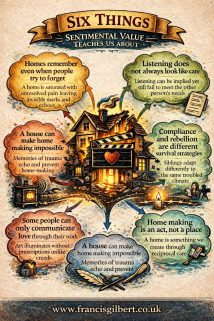
Six Things I Learnt About Home Making from the Film Sentimental Value
Six things we can learn about home making from Sentimental Value What if home is not a place at all, but something we make moment by moment with other people? In Joachim Trier’s Sentimental Value, a Norwegian house becomes a vessel for memory, trauma, silence, and art. The film asks difficult questions about listening, inheritance, history, and how families survive when love is expressed imperfectly or too late. This piece reflects on six lessons about home making drawn from the film, from the way houses remember what people try to forget, to why care cannot be reduced to attentiveness alone, and how home may ultimately be created through reciprocal understanding rather than walls or ownership. The concept map above distils these ideas visually. Read the full blog here: www.francisgilbert.co.uk If you’re reading this on Instagram, please paste the link into your browser to access the full article.
-
7 Ways For Teachers to become Researchers
In December 2025, I delivered an online session for FE lecturers as part of the British Library Research Network, working with Debbie Bogard of the British Library. We explored seven things every teacher should know about research, using the original Alice in Wonderland manuscript as a metaphor for how inquiry really works. Research is never perfect or polished. It is exploratory, creative, full of revision and curiosity, just like a teacher’s everyday practice. We introduced practical ways to develop a research question, map its key ideas, choose an appropriate methodology, evaluate the credibility of data, and create a meaningful literature review. We also encouraged lecturers to think about more imaginative forms of sharing findings, including podcasts, infographics and multimodal projects. Examples from the Parklife project showed how creative participatory research can have a significant impact on communities and young people. The central message of the session was that research is an act of professional courage. It is not reserved for academics. With the support of the British Library Research Network, FE educators can shape their own inquiries, strengthen their critical thinking, and generate new knowledge that benefits learners and the wider sector.
-
Honouring the Humanity of an Exceptional Student: Zhe Wang
The conclusion of the trial into the tragic death of Zhe Wang has brought renewed sadness to our community, but it also reminds us of the importance of remembering who she was beyond these events. Zhe was a gentle, attentive presence on the MA Creative Writing and Education, someone whose calmness and kindness shaped the spaces she entered. Her writing revealed a rare sensitivity to nature, stillness, and the quiet movements of thought, offering readers a way to slow down and reconnect with the world. Her classmates honoured her with great care, gathering her poems and prose into a beautifully produced anthology that reflects both her creativity and the affection she inspired. As we commemorate her, we hold close her humanity, her thoughtful way of being, and the luminosity of her work. Through her words and through our remembering, Zhe’s presence continues to shine.
-
Five Things We Should Know About Irish Identity Abroad
In this Mindful Learning podcast, Francis Gilbert talks with MA Creative Writing and Education graduate Conor Patchell about his remarkable dissertation film on Irish identity abroad. Conor reflects on the stories he inherited from his grandfather about discrimination in England, the resilience of earlier generations, and the dramatic shift from suspicion to celebration that Irish people have experienced over seventy years. He explains how today’s warmth towards Irish culture rests on the labour, humour, and decency of migrants like Ann, Patsy, John, and Vincent, whose voices shape his film. Conor describes his own experience as “a popular immigrant” and speaks with gratitude about those who “paved the way for us”. This extract gives readers a glimpse into a deeply mindful exploration of migration, memory, and belonging. If you are reading this on Instagram, please paste the link into your browser to access the full article.
-

The Healing Dance: Human Givens, Catharsis, and the Power of Stories
After more than thirty years of teaching, writing, and listening to people share their work and their worries, I’ve come to believe that stories don’t just entertain or instruct us; they heal us. In this post, I explore how narrative and imagination can restore emotional balance, drawing on my recent training in the Human Givens approach to therapy. During one of my training sessions, I worked with a woman I’ll call Anna, a dance teacher who had been sidelined by a younger colleague. I invited her to relax and told a simple story about a dancing queen who built a palace of movement and joy. When a former pupil tried to claim the palace as her own, the queen didn’t fight, she danced again. Her rhythm filled the hall and reminded everyone where the music had begun. As Anna listened, tears came — not from distress, but from recognition. The story acted as a mirror, reflecting her creative worth back to her. It wasn’t interpretation that healed her, but the moment when the story met the truth she’d carried inside all along. From Aristotle’s notion of catharsis to modern neuroscience and the Human Givens idea of “raising the emotional template,” this post explores how guided story and metaphor can help us complete interrupted stories, transforming chaos into coherence. When we re-story our experiences with compassion, the body listens, and healing begins.
-
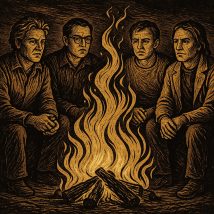
If I Were to Hold a Retreat for Entitled Men
🔥 If I were to hold a retreat for entitled men, I’d start with a fire. Kelly Reichardt’s The Mastermind (2025) burns with quiet devastation. It’s not a heist film but a parable — a portrait of what happens when unmet needs twist imagination into delusion. Drawing on the Human Givens approach and ideas from The Mindful Creative Writing Teacher (Gilbert, 2024), this reflection explores how men lose themselves when creativity serves ego rather than empathy. Read the full essay: The Mastermind: A Parable for Entitled Men and the Search for Meaning 🕯️ For teachers, therapists, and fathers alike, it asks one question that lingers long after the flames fade: What is it you really need? WARNING: This post contains plot spoilers for the film, The Mastermind (2025)!
-
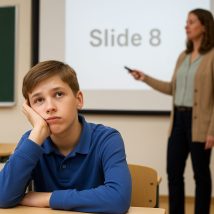
Five Things the New Are You on Slide 8 Yet? Report Can Teach Us About Learning in Schools
In this new episode of the Mindful Learning Podcast, I speak with Dr Sarah Pearce and Dr Anna Traianou about their powerful new report for the National Education Union, Are You on Slide 8 Yet?. The title comes from one teacher’s chilling experience: senior leaders checking through classroom doors to ensure every class was on the same PowerPoint slide. This report reveals how standardised curricula—ready-made lessons and scripts—are reshaping education across England, limiting both teacher autonomy and pupil creativity. As Dr Pearce explains, “If the children didn’t understand it, it almost didn’t matter. We had to keep going.” Teachers described feeling like “a warm body in front of the class,” stripped of professional judgement. Professor Traianou adds, “Teachers who used standardised curricula reported a reduced sense of decision-making and agency… and contrary to assumptions, no difference in workload.” The findings show that both teachers and pupils are losing opportunities for autonomy, collaboration, and meaningful talk—core elements of learning that mindfulness in education seeks to protect. We discuss the political roots of this trend, the dangers of AI-driven curriculum tools, and what mindful, human-centred education might look like instead. 🎧 Listen now to the full podcast and read the article: 👉 https://www.francisgilbert.co.uk/2025/10/five-things-the-new-are-you-on-slide-8-yet-report-can-teach-us-about-learning-in-schools If you’re reading this on Instagram, please paste the link into your browser to access the full article. #MindfulLearning #AreYouOnSlide8Yet #FrancisGilbert #Goldsmiths #Teaching #Education #NEU #CreativeEducation #TeacherVoice #MindfulTeaching #Podcast
-
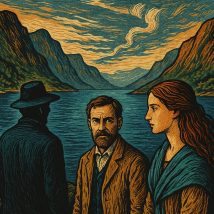
The Lady from the Sea: Five Lessons We’ve Lost in Translation
Simon Stone’s new adaptation of Ibsen’s The Lady from the Sea at the Bridge Theatre, starring Alicia Vikander and Andrew Lincoln, is exquisite and psychologically nuanced — yet something vital has ebbed away. In translating Ibsen’s Fruen fra havet into modern English realism, the production trades myth for therapy, danger for empathy. This article explores five lessons the original still teaches us (about desire, freedom, landscape, symbolism, and voice) and what is lost when we tame the sea into a lake.
-
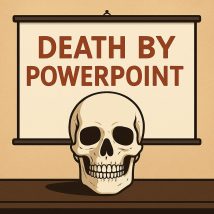
Five Big Wake-Up Calls from the New Curriculum Reports
Two major reports have shaken up the education debate in 2025. The National Education Union’s Are You on Slide 8 Yet? (Traianou, Pearce, Stevenson & Brady, 2025) lays bare the lived realities of teachers trapped in the machinery of standardisation. The government’s Curriculum and Assessment Review: Interim Report (Francis, 2025) goes further than expected, acknowledging deep systemic flaws while hinting at long-overdue reform. These reports land in a time of crisis. Child poverty is rising, teacher pay has stagnated, burnout is escalating, and authoritarian regimes of behaviour management have taken hold in many academies. AI is reshaping classrooms faster than policy can keep up. Together, these forces are eroding teacher autonomy and narrowing the curriculum’s moral and intellectual horizons. This blog identifies five urgent wake-up calls for policymakers. First, the curriculum is failing the children who need it most; inequality is widening. Second, teachers are suffering “death by PowerPoint,” stripped of agency and creativity. Third, workload has not eased; it has intensified under centralised schemes. Fourth, curriculum reform must be guided by dialogue and research, not ideology. And finally, education must equip young people to navigate an uncertain, unequal, AI-driven world. Both reports demand courage and imagination from policymakers. Incremental fixes will not be enough. At Goldsmiths, we are developing models of curriculum design that restore teacher professionalism and creativity, grounded in research-rich, socially just principles. It is time for a new settlement in education, one that trusts teachers, resists authoritarianism, and empowers young people to shape a fairer future. If you’re reading this on Instagram, please paste the link into your browser to access the full article.
Five Things I Learnt About Winning from Marty Supreme
What does it really mean to win? I went to see Marty Supreme expecting a sports movie, or at least a film about ambition. What I came away with was something darker and more unsettling. A portrait of winning at all costs, and the quiet wreckage left behind when success becomes the only value left standing. Ping pong is treated with utter seriousness in this film. No irony, no wink. It becomes a lens through which we watch a man climb, dominate, discard, and hollow himself out. Marty wins matches, lovers, money, status. He also abandons people, humiliates himself, and loses any capacity for kindness or care. The film’s greatest strength is its visual world. 1950s Manhattan, the shoe shop, the light, the textures, the labour. These spaces quietly tell a story Marty refuses to hear. Winning lifts him out of community and leaves him alone with his trophies. This blog reflects on five things the film taught me about winning, losing, seriousness, vulnerability, and why ambition without ethics ends up looking absurd rather than heroic. If you are interested in culture, education, masculinity, parenting, or what we teach children about success, this film, and this moment, are worth thinking about. Read the full piece on my website. If you’re reading this on Instagram, please paste the link into your browser to access the full article.