
NB: This review contains spoilers!
I watched Hamnet at my local cinema, Crouch End Picturehouse, this Saturday and found it illuminating, troubling, and quietly moving. I taught Hamlet for A level English for many years and thought I knew the play intimately. This film unsettled that familiarity in interesting ways, not by offering new facts, but by proposing a bold emotional reading and asking the viewer to live inside it.
Let me begin with a factual point, because it matters. William Shakespeare’s son Hamnet Shakespeare died in 1596, aged eleven. Hamlet was written several years later, most likely between 1599 and 1601. So the chronology that underpins the film’s premise is historically sound. What remains uncertain, and necessarily speculative, is how directly that loss shaped the play. The film leans hard into that speculation, and it is worth holding that tension in mind while watching.
1. Emotional truth is not the same as historical truth
The film presents Hamlet as an extended elegy, almost a psychic working through of unbearable grief. That claim cannot be proven, but it is not absurd. Literature often metabolises experience slowly, indirectly, and through displacement rather than confession. Psychoanalytic theory has long suggested that loss may reappear symbolically rather than explicitly, and Freud’s distinction between mourning and melancholia remains a useful, if incomplete, starting point here (Freud, 1917). Mourning allows the world to be reoccupied; melancholia internalises the lost object and turns it against the self.
What the film gets right is that grief rarely looks tidy. Contemporary bereavement research emphasises oscillation rather than progression, with people moving between immersion in loss and engagement with ordinary life, sometimes moment by moment (Stroebe and Schut, 1999). Even so called normal grief can involve anger, numbness, fixation, bodily disturbance, and sudden tonal shifts. In that sense, the film’s emotional logic is plausible even where its historical claims remain speculative.
2. Jessie Buckley’s Anne Hathaway is the emotional centre of the film
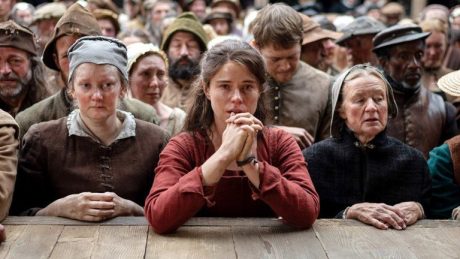
The most compelling scenes belong to Jessie Buckley as Anne Hathaway. These sequences are rooted in breath, touch, soil, plants, and domestic labour. They give the film its texture and gravity. There is something almost Tarkovskian about the way landscape seems to think alongside her, not as backdrop but as participant.
From a grief studies perspective, this makes sense. The film shows what contemporary theory calls continuing bonds, the idea that relationships with the dead are not severed but renegotiated over time through memory, objects, ritual, and sensation (Klass, Silverman and Nickman, 1996). Anne’s grief is not resolved; it is lived with, embodied, and carried.
3. English nature is treated as a living intelligence
The forest scenes are among the film’s strongest. They recall Shakespeare’s own instinct that nature is not passive scenery but an active force. Think of the Forest of Arden, of storms and seasons, of rot and regeneration, of birds, plants, and weather that seem to answer human feeling without explaining it.
This ecological attentiveness works because it resists psychologising everything. Grief does not exist only inside the head; it changes how the world is perceived. The film’s willingness to let landscape hold meaning without translating it into dialogue is one of its quiet strengths.
4. Paul Mescal is initially miscast, but grows into the role
Paul Mescal is clearly too old to play the teenage Shakespeare we meet at the beginning, and at first this distracts. Gradually, it stops mattering. His stillness and inwardness begin to feel appropriate, especially as the character withdraws into absence, travel, and language.
Seen through the lens of grief theory, this withdrawal makes sense. Avoidant coping, emotional constriction, and immersion in work are all well documented responses to loss, particularly where the bereavement remains unspoken or unresolved (Stroebe and Schut, 1999; Eisma, 2023). The performance becomes convincing not because it is biographically precise, but because it captures a recognisable emotional pattern.
5. Anne Hathaway was likely far more intellectually involved than the film suggests
This is where the film falters. Anne is presented as almost illiterate, intuitive, and marginal to literary culture. This feels reductive. Anne Hathaway was almost certainly a highly intelligent woman, immersed in oral culture, domestic knowledge, storytelling, and memory. It is entirely plausible that she shaped Shakespeare’s imaginative world more than the film allows.
Portraying her as witchy but barely articulate repeats a familiar trope, the intuitive woman as emotional vessel rather than intellectual collaborator. It also underplays how knowledge circulated in early modern England through speech, proverb, and performance, not only through books.
6. Hamlet becomes a form of family therapy
One of the film’s most intriguing ideas is that Hamlet functions as a kind of family constellation. The ghost of the murdered father becomes a proxy for the dead son; Hamlet himself becomes another stand in. Art, in this telling, is a space where trauma is enacted rather than resolved.
This is a distinctly modern conception, shaped by family systems theory and contemporary therapeutic culture. Family focused grief therapy, for example, treats bereavement as a relational process, where roles, communication patterns, and alliances reorganise after a death (Lamberti, 1993; Masterson et al., 2013). Longitudinal research shows that grief related symptoms influence family members bidirectionally over time (Lenferink et al., 2023).
Family constellation therapy pushes this logic further by staging symbolic representations of family dynamics across generations. There is some emerging evidence of benefit, including randomised trial data suggesting improvements in psychological functioning (Weinhold et al., 2013), and systematic reviews indicating promise, alongside serious methodological limitations and the need for caution (Konkolÿ Thege et al., 2021; 2024). As a metaphor for how art redistributes unspoken family pain, the idea works. As an explanation for Shakespeare’s creative process, it should be held lightly.
7. The danger of biographical overreach
It is tempting to argue that Shakespeare’s writing darkened because Hamnet died. The timing makes the story emotionally satisfying, and some psychoanalytic readings lean into this connection. Yet it is also naïve to imagine that art worked this way in Shakespeare’s time.
Shakespeare was a commercial playwright writing for a competitive theatre culture, shaped by audience expectation, repertory demands, collaboration, censorship, and genre. The modern habit of reading literature as masked autobiography is just that, modern. Early modern concepts of selfhood were relational rather than autonomous, tied to religion, hierarchy, household, and duty rather than interior self expression (Schoenfeldt, 2019). Likewise, authorship and ownership functioned very differently in the period, complicating any simple notion of personal confession through art (McDonagh, 2024).
In that sense, the film is less a historical argument than a contemporary myth about creativity and grief.
One final thought
Hamnet feels like a post COVID film. The child has an oddly elderly quality, reminiscent of Father Time in Jude the Obscure. He seems to stand for the dead we did not properly grieve during lockdown, the losses that passed without ritual, gathering, or touch. In that reading, the film is less about Shakespeare than about our own unfinished mourning.
At the Crouch End Picturehouse, some people walked out. Others were in tears. Shakespeare specialists may find themselves wincing. Strangely, it may be easier to watch if you know very little about Shakespeare at all.
This is a flawed film, but a thought provoking one. I would recommend it with curiosity rather than reverence.
If you are interested in how stories allow us to enter difficult emotional spaces without explaining them away, you might also enjoy my piece on fairy tales and inner landscapes, Reading children’s fairytales inside the gingerbread house.
References
Eisma, MC (2023) Prolonged grief disorder in ICD-11 and DSM-5-TR: Challenges and controversies. Aust N Z J Psychiatry. 57(7):944-951. doi: 10.1177/00048674231154206
Freud, S. (1917) ‘Mourning and Melancholia’, in The Standard Edition of the Complete Psychological Works of Sigmund Freud. London: Hogarth Press.
Klass, D., Silverman, P.R. and Nickman, S. (1996) Continuing Bonds: New Understandings of Grief. New York: Taylor and Francis.
Konkolÿ Thege B, Petroll C, Rivas C, Scholtens S. (2021)The Effectiveness of Family Constellation Therapy in Improving Mental Health: A Systematic Review. Fam Process. 2021 Jun;60(2):409-423. doi: 10.1111/famp.12636
Konkolÿ Thege B, Szabó GS. (2024) The efficacy of pandemic-adjusted family/systemic constellation therapy in improving psychopathological symptoms: A randomized controlled trial. J Psychiatr Res;177:271-278. doi: 10.1016/j.jpsychires.2024.07.027
Lamberti, J.W. (1993) ‘A model of family grief assessment and treatment’, Death Studies, 17(3), pp. 217–232.
Lenferink LIM, O’Connor M. (2023) Grief is a family affair: examining longitudinal associations between prolonged grief in parents and their adult children using four-wave cross-lagged panel models. Psychol Med. 53(15):7428-7434. doi: 10.1017/S0033291723001101
Masterson, M. P., Schuler, T. A., & Kissane, D. W. (2013). Family focused grief therapy: a versatile intervention in palliative care and bereavement. Bereavement care : for all those who help the bereaved, 32(3), 117–123. https://doi.org/10.1080/02682621.2013.854544
McDonagh, L. (2024). Exploring authorship and ownership of plays at the time of William Shakespeare’s First Folio. Law and Humanities, 18(2), 265–281. https://doi.org/10.1080/17521483.2024.2380112
Schoenfeldt, M (Ed) (2019) John Donne in Context. Cambridge: Cambridge University Press.
Stroebe, M., & Schut, H. (1999). The dual process model of coping with bereavement: rationale and description. Death studies, 23(3), 197–224. https://doi.org/10.1080/074811899201046
Weinhold, J., Hunger, C., Bornhäuser, A., Link, L., Rochon, J., Wild, B., & Schweitzer, J. (2013). Family constellation seminars improve psychological functioning in a general population sample: results of a randomized controlled trial. Journal of counseling psychology, 60(4), 601–609. https://doi.org/10.1037/a0033539