
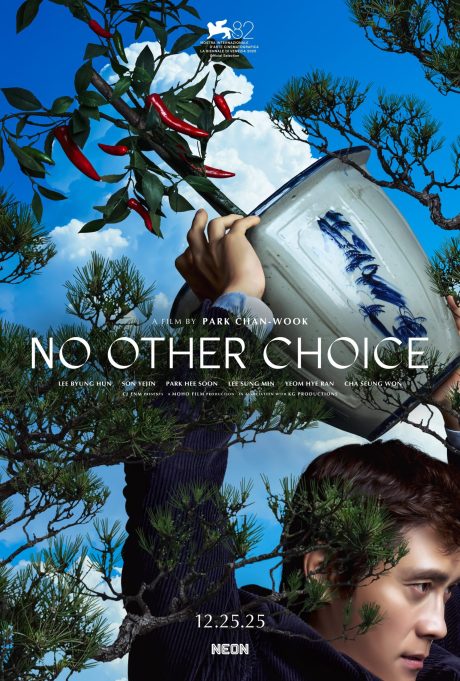
Contains major plot spoilers.
Park Chan-wook’s No Other Choice is the kind of film that makes you laugh, then makes you wonder what the laugh did to you. It has his trademark control, that uncanny glide from the ordinary into the grotesque, that sense that the world is perfectly arranged and therefore deeply wrong.
It is also, for all its violence, a family film. A film about a man who loves his people, and who turns that love into a weapon, because neoliberal life teaches him there is no other respectable form of masculinity left. The premise is brutally simple. A laid-off paper expert decides to murder his rivals for a job so he can keep his home, his status, his children’s future.
I watched it in a cinema where people actually laughed during some of the murder scenes. Park stages them with horrible practicality. Killing is messy, heavy, time consuming. It is not the clean click of genre fantasy. It reminded me of Alfred Hitchcock’s Torn Curtain, with its infamous prolonged killing scene, included precisely to show that murder is not effortless. You have to wrestle a body. You have to breathe. You have to finish what you started.
What follows are five things the film taught me about men, family, and the system.
1. The system turns love into a threat
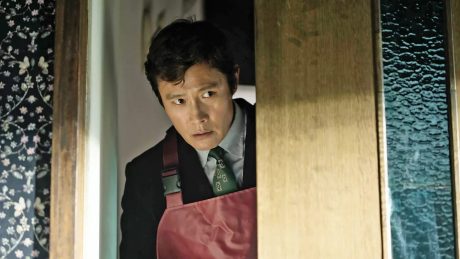
Man-su does not begin as a monster. He begins as a provider who has been made disposable by corporate logic, a buyout, a downsizing, a humiliation dressed up as restructuring.
The film’s first cruelty is not the killing. It is the way employment is treated as moral worth. Without a job he becomes, in the eyes of the world and partly in his own eyes, less real. The office is not merely a workplace; it is a metaphysical certificate of existence.
Neoliberal culture has fused masculinity with productivity. Tenderness is permitted only if it is funded. Love must be solvent. When the salary disappears, the tenderness panics.
This is why the murders are framed, at least in Man-su’s mind, as rational acts of care. He is not pursuing pleasure. He is pursuing restoration. The horror lies in the logic: if my family’s survival depends on my employment, and employment is war, then what am I permitted to do in wartime?
The film does not endorse that reasoning. It simply shows how easily it forms.
2. A family can be the sweetest refuge, and an engine of fear
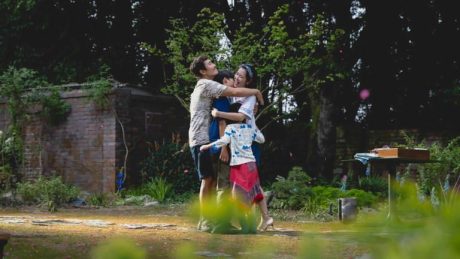
The family scenes are among the most upsetting in the film, not because they are melodramatic, but because they are recognisable. The mortgage. The status anxiety. The cramped negotiations about what gets sacrificed. Even the rehoming of the dogs. It is staged as domestic realism, and then it curdles.
The film understands a brutal truth. Family love is real. But it can become a private dictatorship when one person decides they must protect everyone at any cost.
Man-su does not terrorise his family directly. He protects them from knowledge. That concealment becomes its own violence. The home, supposedly a sanctuary, is built on omission.
The title, No Other Choice, is both excuse and indictment. He insists there is no alternative. The film quietly asks whether that insistence is itself the fatal decision.
3. Murder is treated as work, and that is the darkest joke
Park makes the murders feel like tasks on a list: reconnaissance, procurement, timing, mistakes, recovery, disposal. This is why audiences laugh. Not because it is funny, but because it is recognisably procedural.
The film becomes a black comedy about the job market that mutates into a black comedy about murder as a job application. You eliminate the competition. You tailor your performance. You network with your target. You close.
The satire bites because it is not exaggerated. Corporate language already borrows from warfare. We speak of targets, strategies, hostile takeovers, kill fees. Violence is metaphor. Park simply removes the metaphor.
The joke lands. Then you realise you have been trained to understand it.
4. Masculinity is trapped between breadwinner and predator
What struck me most was how few roles are available to the male characters. Provide, or hunt. That is the binary. The tragedy is that Man-su seems to want a third role: carer, father, partner, someone allowed to be ordinary without being disposable.
Even the successful men in the film are not enviable. Their success depends on the same system that could discard them tomorrow. They are not secure. They are temporarily spared.
This is where the film feels unexpectedly humane. It does not reduce masculinity to pathology. It shows how narrow the script has become. If worth equals wage, then the loss of wage feels like ontological collapse.
In that context, violence becomes not only temptation but proof of agency. To act is to exist.
5. The film’s amorality is the point, and it should worry us
One of the strangest aspects of the film is how lightly consequences land, or rather, how deftly they are redirected. This is not a moral fable in which guilt cleanses the world. It is closer to a nightmare of modern life. The system can absorb almost anything, including murder, as long as the right story is told and the paperwork points elsewhere.
When Man-su finally gets what he wants, the celebration is not cathartic. It is lonely, mechanised, faintly dead.
That ending felt like Park saying: you thought the violence was the aberration. The real horror is that it worked.
If Oldboy was about imprisonment as destiny, No Other Choice is about employment as destiny, and what it does to the soul when a man is told that his only value is his wage, his only dignity his competitiveness, and his only freedom the freedom to destroy.
It is not an easy film. It does not reassure. But it is precise.
And the laughter it provokes is not a release. It is a mirror.