
All articles on this site
-
Five Things We Should Know About Irish Identity Abroad
In this Mindful Learning podcast, Francis Gilbert talks with MA Creative Writing and Education graduate Conor Patchell about his remarkable dissertation film on Irish identity abroad. Conor reflects on the stories he inherited from his grandfather about discrimination in England, the resilience of earlier generations, and the dramatic shift from suspicion to celebration that Irish people have experienced over seventy years. He explains how today’s warmth towards Irish culture rests on the labour, humour, and decency of migrants like Ann, Patsy, John, and Vincent, whose voices shape his film. Conor describes his own experience as “a popular immigrant” and speaks with gratitude about those who “paved the way for us”. This extract gives readers a glimpse into a deeply mindful exploration of migration, memory, and belonging. If you are reading this on Instagram, please paste the link into your browser to access the full article.
-
The Healing Dance: Human Givens, Catharsis, and the Power of Stories
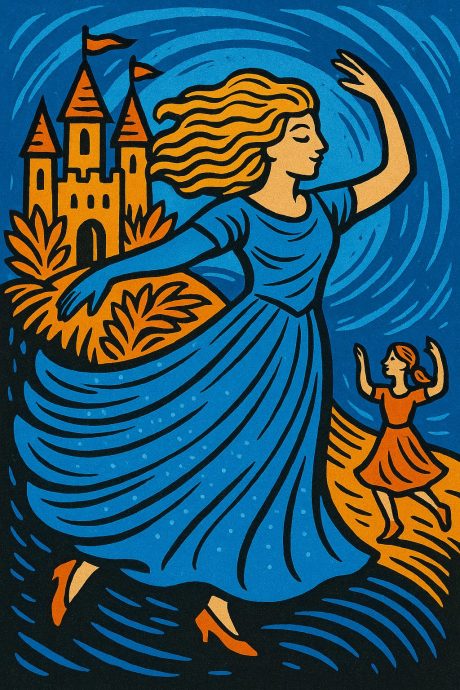
After more than thirty years of teaching, writing, and listening to people share their work and their worries, I’ve come to believe that stories don’t just entertain or instruct us; they heal us. In this post, I explore how narrative and imagination can restore emotional balance, drawing on my recent training in the Human Givens approach to therapy. During one of my training sessions, I worked with a woman I’ll call Anna, a dance teacher who had been sidelined by a younger colleague. I invited her to relax and told a simple story about a dancing queen who built a palace of movement and joy. When a former pupil tried to claim the palace as her own, the queen didn’t fight, she danced again. Her rhythm filled the hall and reminded everyone where the music had begun. As Anna listened, tears came — not from distress, but from recognition. The story acted as a mirror, reflecting her creative worth back to her. It wasn’t interpretation that healed her, but the moment when the story met the truth she’d carried inside all along. From Aristotle’s notion of catharsis to modern neuroscience and the Human Givens idea of “raising the emotional template,” this post explores how guided story and metaphor can help us complete interrupted stories, transforming chaos into coherence. When we re-story our experiences with compassion, the body listens, and healing begins.
-
If I Were to Hold a Retreat for Entitled Men
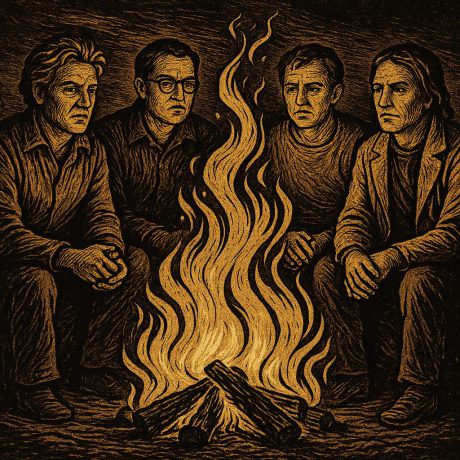
🔥 If I were to hold a retreat for entitled men, I’d start with a fire. Kelly Reichardt’s The Mastermind (2025) burns with quiet devastation. It’s not a heist film but a parable — a portrait of what happens when unmet needs twist imagination into delusion. Drawing on the Human Givens approach and ideas from The Mindful Creative Writing Teacher (Gilbert, 2024), this reflection explores how men lose themselves when creativity serves ego rather than empathy. Read the full essay: The Mastermind: A Parable for Entitled Men and the Search for Meaning 🕯️ For teachers, therapists, and fathers alike, it asks one question that lingers long after the flames fade: What is it you really need? WARNING: This post contains plot spoilers for the film, The Mastermind (2025)!
-
Writing Among Books and Roses: Five Lessons from the British Library and a South London Garden
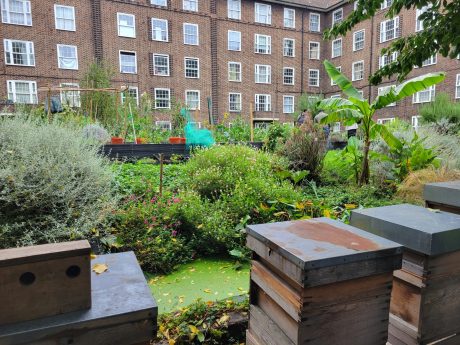
This October, as autumn mist drifted across London, our MA Creative Writing and Education students embarked on two journeys that revealed how creativity grows wherever attention is cultivated — one in the British Library, the other in a South London garden. At the British Library, students began by getting their Reader’s Passes, a small but symbolic act of entry into a world of ideas. Each went on a quiet quest to find a book, manuscript, or object that spoke personally to them. One student of Mauritian heritage discovered colonial-era texts that illuminated her island’s past; another, from India, was drawn to the gleam of jewellery that recalled her grandmother’s only inheritance — her bangles. These encounters sparked reflective, poetic responses, showing how archives can awaken ancestral memory and imaginative connection. Later that week, the group met Ian, the Head Gardener — @theelephantgardener — who, with volunteers and modest grants, has transformed an estate’s communal garden into a flourishing haven of rhubarb, roses, and vegetables. The students weeded, listened, and wrote, finding that creative writing, like gardening, begins with observation and care. Both experiences taught us that creative writing doesn’t belong only to the elite or to “literary” spaces. It is a democratic, sensory practice that helps us connect — with the past, with nature, and with one another. Like Keats’s “Season of mists and mellow fruitfulness,” October reminded us that writing and gardening share a rhythm: gathering what’s ripe, planting what’s next. The writers are now planning projects to use libraries and gardens as creative classrooms — helping children, elders, and communities to grow stories from the soil beneath their feet.
-
Five Things I Learnt from Running My Workshop at Ecology in the Art Curriculum event
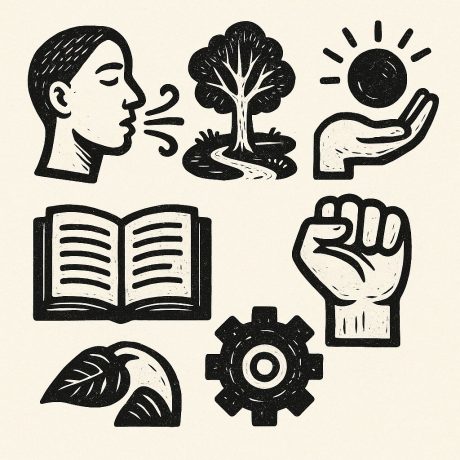
Begin with breathing, end with agency Our recent CPD, run by the British Ecological Society, the Centre for Arts and Learning, the MA in Art and Ecology, and the PGCE Art and Design programme at Goldsmiths, brought together teachers, artists, and ecologists to explore how mindfulness and creative pedagogy can help students reconnect with the natural world. We began simply, with a 7–11 breathing pattern, in for seven, out for eleven, and the room shifted. Teachers found themselves calmer, more attentive, and ready to imagine. A guided visualisation led participants into remembered or imagined parks, awakening ecological awareness. One delegate described how “thinking about ecology in architecture always meant thinking about care, what lives around our buildings.” From that mindful pause grew dialogue, drawing, and story. Participants wrote, sketched, and mapped experiences of safety, resilience, and belonging. Multimodality helped everyone find a voice, whether through words, images, or textures, and teachers began to see how pupils could express complex feelings about public space. Stories carried particular weight. The tale of the cracked pot, a vessel that leaks water and nurtures flowers on its path, became a metaphor for resilience and repair. Teachers shared their own narratives of strength and imperfection, connecting personal reflection with community action. By the end, delegates were planning how to adapt these approaches in their own settings, mapping safe routes with pupils, collaborating with councils, and gathering data to balance perception and reality. Change, we realised, does not arrive as a slogan but travels through networks of small, mindful acts. As I suggest in The Mindful Creative Writing Teacher, small rituals of attention such as breathing, noticing, and creating build agency. They help us move from reflection to action, from seeing to doing, with care.
-
Five Things the New Are You on Slide 8 Yet? Report Can Teach Us About Learning in Schools
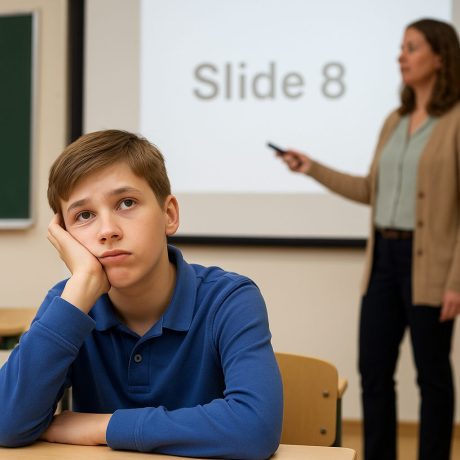
In this new episode of the Mindful Learning Podcast, I speak with Dr Sarah Pearce and Dr Anna Traianou about their powerful new report for the National Education Union, Are You on Slide 8 Yet?. The title comes from one teacher’s chilling experience: senior leaders checking through classroom doors to ensure every class was on the same PowerPoint slide. This report reveals how standardised curricula—ready-made lessons and scripts—are reshaping education across England, limiting both teacher autonomy and pupil creativity. As Dr Pearce explains, “If the children didn’t understand it, it almost didn’t matter. We had to keep going.” Teachers described feeling like “a warm body in front of the class,” stripped of professional judgement. Professor Traianou adds, “Teachers who used standardised curricula reported a reduced sense of decision-making and agency… and contrary to assumptions, no difference in workload.” The findings show that both teachers and pupils are losing opportunities for autonomy, collaboration, and meaningful talk—core elements of learning that mindfulness in education seeks to protect. We discuss the political roots of this trend, the dangers of AI-driven curriculum tools, and what mindful, human-centred education might look like instead. 🎧 Listen now to the full podcast and read the article: 👉 https://www.francisgilbert.co.uk/2025/10/five-things-the-new-are-you-on-slide-8-yet-report-can-teach-us-about-learning-in-schools If you’re reading this on Instagram, please paste the link into your browser to access the full article. #MindfulLearning #AreYouOnSlide8Yet #FrancisGilbert #Goldsmiths #Teaching #Education #NEU #CreativeEducation #TeacherVoice #MindfulTeaching #Podcast
-
The Lady from the Sea: Five Lessons We’ve Lost in Translation
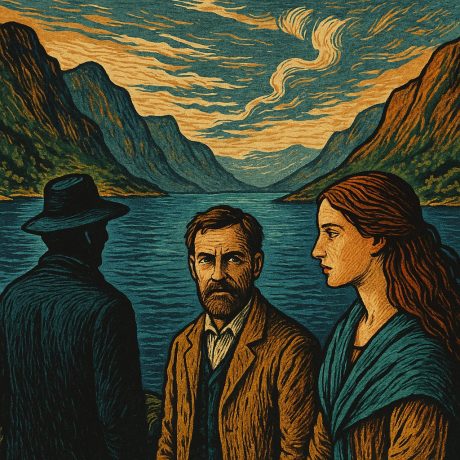
Simon Stone’s new adaptation of Ibsen’s The Lady from the Sea at the Bridge Theatre, starring Alicia Vikander and Andrew Lincoln, is exquisite and psychologically nuanced — yet something vital has ebbed away. In translating Ibsen’s Fruen fra havet into modern English realism, the production trades myth for therapy, danger for empathy. This article explores five lessons the original still teaches us (about desire, freedom, landscape, symbolism, and voice) and what is lost when we tame the sea into a lake.
-
Five Big Wake-Up Calls from the New Curriculum Reports
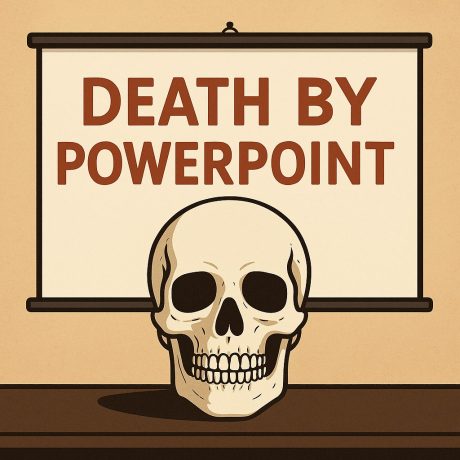
Two major reports have shaken up the education debate in 2025. The National Education Union’s Are You on Slide 8 Yet? (Traianou, Pearce, Stevenson & Brady, 2025) lays bare the lived realities of teachers trapped in the machinery of standardisation. The government’s Curriculum and Assessment Review: Interim Report (Francis, 2025) goes further than expected, acknowledging deep systemic flaws while hinting at long-overdue reform. These reports land in a time of crisis. Child poverty is rising, teacher pay has stagnated, burnout is escalating, and authoritarian regimes of behaviour management have taken hold in many academies. AI is reshaping classrooms faster than policy can keep up. Together, these forces are eroding teacher autonomy and narrowing the curriculum’s moral and intellectual horizons. This blog identifies five urgent wake-up calls for policymakers. First, the curriculum is failing the children who need it most; inequality is widening. Second, teachers are suffering “death by PowerPoint,” stripped of agency and creativity. Third, workload has not eased; it has intensified under centralised schemes. Fourth, curriculum reform must be guided by dialogue and research, not ideology. And finally, education must equip young people to navigate an uncertain, unequal, AI-driven world. Both reports demand courage and imagination from policymakers. Incremental fixes will not be enough. At Goldsmiths, we are developing models of curriculum design that restore teacher professionalism and creativity, grounded in research-rich, socially just principles. It is time for a new settlement in education, one that trusts teachers, resists authoritarianism, and empowers young people to shape a fairer future. If you’re reading this on Instagram, please paste the link into your browser to access the full article.
-
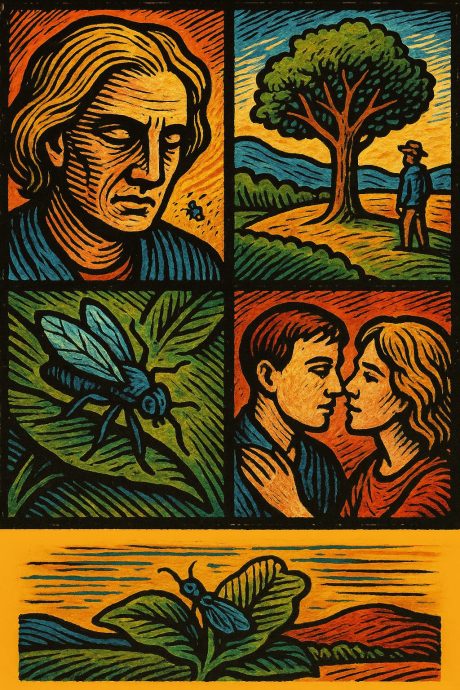
Four things the novels of Patrick White can teach us
Patrick White remains Australia’s only Nobel Prize winner in Literature, yet today his novels are often more admired than read. Fifty years after his Nobel award, critics such as Reuben Mackey (2023) note the curious neglect of a writer who once defined the Australian canon. In this blog I revisit White’s fiction through my own journey with his novels, beginning as a university student wrestling with The Vivisector, and reflect on what they still have to teach us. I focus on four key lessons. First, White’s prose teaches mindfulness: the beauty of fleeting details and the poetry of the present moment. Second, his groundbreaking novel The Twyborn Affair questions rigid gender binaries, anticipating today’s conversations around fluid identity. Third, works like Voss and Riders in the Chariot challenge Eurocentric narratives, offering a decolonising vision of Australian literature. Finally, across his oeuvre White portrays authentic human relationships – complex, flawed, yet profound. This piece blends personal reflection with critical insights, showing how White’s novels remain relevant guides to living thoughtfully, compassionately, and truthfully. Read the full article here: https://www.francisgilbert.co.uk/2024/12/four-things-the-novels-of-patrick-white-can-teach-us/ #PatrickWhite #AustralianLiterature #Mindfulness #Decolonising #CreativeWriting #Books
-
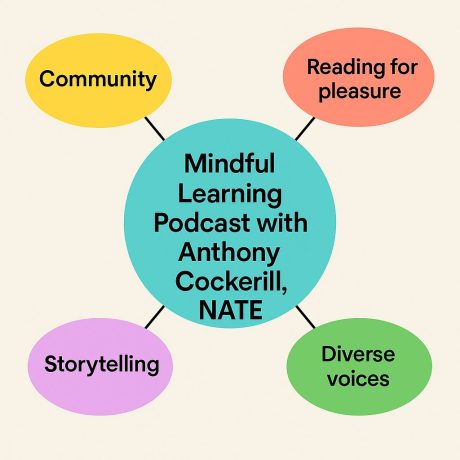
Five Things English Teachers Can Teach Us About Reading, Writing, and Living
I recorded this episode of the Mindful Learning Podcast with Anthony Cockerill, director of the National Association for the Teaching of English (NATE), because I believe English teachers have so much to teach us beyond the classroom. Our conversation was a chance to explore what reading, writing, and language mean for all of us as human beings, not just for students in schools. Anthony spoke passionately about the life-changing power of reading for pleasure, the way writing can help us respond to and reflect on life, and the importance of valuing every community’s language. He reminded me that stories shape who we are and that teaching thrives best in community, not in isolation. These are not just classroom lessons — they are life lessons. I wanted to share this podcast because, at a time when education is often framed in narrow, utilitarian terms, we need to remember the broader value of English. Reading, writing, and language are not luxuries; they are ways of being human, of building empathy, resilience, and imagination. Listen to the full conversation and read the blog here: 👉 https://www.francisgilbert.co.uk/2025/09/five-things-english-teachers-can-teach-us-about-reading-writing-and-living/
-
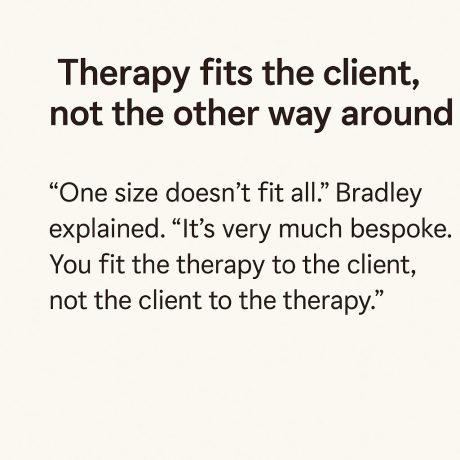
The Mindful Learning Podcast: 7 Things You Should Know About Therapy
If you’re reading this on Instagram, please paste the link into your browser to access the full article. In the latest Mindful Learning Podcast I spoke with therapist Bradley Riddell about what therapy is really like. We explored why therapy is never one-size-fits-all, why humour and trust matter, and how clients often already carry the resources they need. As Bradley told me: “Being in the room, you’re already leading the client to a collaborative venture… If you don’t respect the sanctity of the person sitting in the chair with you, you’ve no business being in the therapist’s chair.” Read the blog “7 Things You Should Know About Therapy” for the full write-up, including Bradley’s insights and references to leading thinkers like Janina Fisher, Carl Rogers, and Aaron Beck.
-
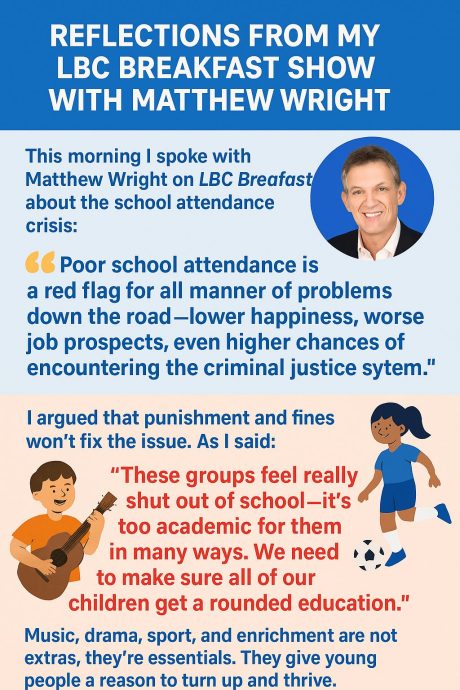
Five Ways to Improve School Attendance
Reflections from my LBC Breakfast Show with Matthew Wright (31 August 2025) This morning I spoke with Matthew Wright on LBC Breakfast about the school attendance crisis. Matthew warned: “Poor school attendance is a red flag for all manner of problems down the road—lower happiness, worse job prospects, even higher chances of encountering the criminal justice system.” I argued that punishment and fines won’t fix the issue. As I said: “These groups feel really shut out of school—it’s too academic for them in many ways. We need to make sure all of our children get a rounded education.” Music, drama, sport, and enrichment are not extras, they’re essentials. They give young people a reason to turn up and thrive. 👉 If you’re reading this on Instagram, please paste the link into your browser to access the full article on francisgilbert.co.uk .
-
Five Things I Learnt About Life and Death from the Extraordinary New Film Late Shift
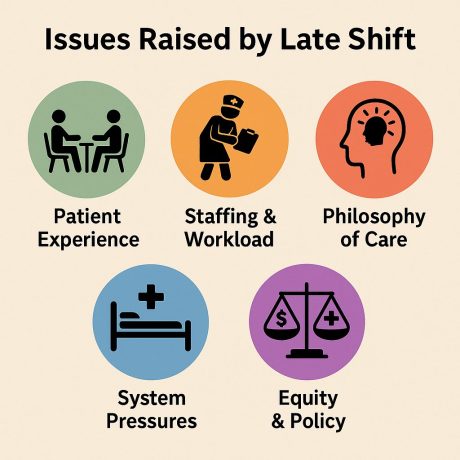
I watched Late Shift (Heldin) at the Alnwick Playhouse and left feeling that everyone in the audience had witnessed life and death together. The film follows Floria, a nurse on the night shift in a Swiss hospital, navigating impossible workloads, patients in pain, angry relatives, and small flashes of compassion. It is both realistic and mythic, a kind of modern Inferno. The film made me reflect on how much we ask of nurses, how dying can be managed well or badly, and how much society needs to decide what we truly want to fund in healthcare. Dignity at 3 a.m. should be a public right, not a private upgrade. Read the full blog on my site: www.francisgilbert.co.uk
-
Five things parents should know about helping their children succeed at school
Reflections from my appearance on LBC Breakfast Show, 21 August 2025 This morning I joined LBC’s breakfast show (with a stand-in presenter for Nick Ferrari) to talk about GCSE results day, inequality, and what parents can do to help their children succeed. It was a wide-ranging, challenging conversation that touched on poverty, parental support, and the pressures on teachers. In my blog I’ve shared five key things parents should know: from why home support matters more than class, to how daily routines and resilience make a real difference. I wanted to write this piece to distil what we discussed on air, connect it to the research, and offer something useful for parents navigating the anxieties of results day. You can read the full article here: www.francisgilbert.co.uk If you’re reading this on Instagram, please paste the link into your browser to access the full article. #LBC #GCSEResults #Education #ParentalSupport #Inequality #Teaching #FrancisGilbert #MindfulParenting #ParentingTips
-
Five Things I Learned from watching Kubrick’s Barry Lyndon
Sitting with my 25-year-old son in the Duke of York’s cinema in Brighton, I was transported back to my student days in the 1980s. Watching Barry Lyndon together felt like a full-circle moment. We stayed near Devil’s Dyke, walking its chalk slopes in the evening light, and the film seemed to seep into the landscape around us. I wrote this piece because Kubrick’s film isn’t simply a costume drama, it is a meditation on history, art, and how human life is staged by ritual and chance. Seeing it again reminded me of my tutor at Sussex, John Barrell, whose teaching showed me that people of the 18th century were not “modern” subjects but beings shaped by poverty, class, and tradition. The film captures that difference with extraordinary precision. Revisiting it with my son was moving. He was as mesmerised as I was, proof that cinema can still speak across generations. Writing the blog was my way of reflecting on how light, landscape, and ritual still shape the way we see ourselves.
-

Seven Things I Learnt from Land of the Free? Trump’s War on Press, Protest and Academic Freedom
What does freedom of expression really mean in 2025? On August 5th, I attended a deeply thought-provoking event hosted by Index on Censorship at St John’s Church, Waterloo, where my wife Erica Wagner was one of the speakers. The panel launched the new Index issue titled Land of the Free? and gathered journalists, editors, and activists to reflect on Donald Trump’s legacy and the erosion of civil liberties across the US and UK. From SLAPP lawsuits to the criminalisation of protest, the conversation reminded us that freedom is not a given: it must be defended, questioned, and collectively sustained. This blog distils seven key lessons I took away from the night, ranging from the legacy of the War on Terror to the global assault on so-called “woke” values. #FreedomOfExpression #IndexOnCensorship #LandOfTheFree #ProtestRights #SLAPPs #CultureWars #Democracy #WritersLife #PoliticalWriting #CreativeNonfiction #EricaWagner #FrancisGilbert #HumanRights #SpeakUp #UKPolitics #USPolitics
-

Seven Things Every Parent Should Know About Teachers and Their Children’s Learning
As a teacher, parent, and author of The Mindful English Teacher, I have seen first-hand how much pressure modern education places on families, and how little space there often is for listening, creativity, and emotional understanding. I created this podcast and companion blog to open up a more compassionate conversation between parents and teachers. Speaking with Yundie Fei, a brilliant former student of mine and now an educator working closely with Chinese families, helped me reflect on how deeply similar our experiences are across cultures. We both see the anxiety, the over-scheduling, and the miscommunication; and we both believe things can change. This is for any parent who has ever worried their child is “falling behind,” questioned a teacher’s methods, or wondered how best to support learning at home. I hope it brings reassurance, insight, and perhaps even a sense of relief: you are not alone, and there is a gentler, more mindful way forward.
-

Five Things Caves Can Teach Us About Our Lives on the Surface of Things
This summer I descended into the Postojna caves in Slovenia and came back with more than just photos. I wrote a poem and a reflection on what caves can teach us about the surface of our lives: about time, silence, the unconscious, and the power of slowness. From Plato’s shadows to Blake’s infernos, from Freud’s depths to Fingal’s Cave, this blog explores how caves have always shaped our stories and our inner worlds. A piece for anyone drawn to the poetic, the meditative, and the quietly transformative. If you’re reading this on Instagram, the link won’t work here; please paste it into your browser or visit www.francisgilbert.co.uk
-

Seven Things I Learnt from The Ballad of Wallis Island
I wrote this blog in response to The Ballad of Wallis Island, a quietly beautiful film that spoke to something deep in me, as a writer, teacher, and person drawn to stories of retreat and reckoning. Watching it reminded me that we all carry a kind of island within us: a place where our creative selves, our ghosts, our pasts and possibilities gather. The film’s setting, tone, and themes of faded fame, broken love, and slow healing made me reflect on what happens when we stop performing and start listening; to others, and to ourselves. That inner island became a metaphor I couldn’t shake. The blog explores this in depth, ending with a poem and a creative visualisation for those wanting to travel inward themselves. Writing it helped me rediscover a part of my own creative practice. I hope it does something similar for you. If you’re reading this on Instagram, please paste the link into your browser to access the full piece at www.francisgilbert.co.uk
-

Five Things I Learned from Exploring Migration Through Art, Drama and Story
“We are all migrants.” That powerful statement opened a transformative Community Day at Goldsmiths on 12 July 2025, part of the Migration Stories project, led by Professor Bulent Gokay, Susan Moffat, and Professor Farzana Shain, and co-hosted by the Migrant Futures Institute and the New Vic’s Borderlines team. I wrote this blog because the workshop moved me deeply, both as an educator and as a human being. It reminded me of the power of creativity, collaboration, and storytelling to make sense of migration as a lived, emotional reality, not just a political issue. I wanted to capture and share the spirit of the day. Through drama, collage, poetry, and play, participants of all ages explored migration as both a personal journey and a shared global condition. We reflected on our names, built imaginary shelters, embodied exclusion, and created powerful responses to the question of what “home” means. The collective reading of The Day the War Came by Nicola Davies brought everything together in a moving final act of shared expression. 📩 Read the blog and register for future events: https://forms.office.com/e/4CtZdN7ZSA #MigrationStories #Goldsmiths #Borderlines #MigrantFutures #CreativeResistance #WeAreAllMigrants
topics I’ve written about on this site
- Archived (444)
- Creative Writers (17)
- Creative Writing Together AHRC Grant (3)
- FGI Publishing (34)
- Dr Jekyll & Mr Hyde: A dramatic adaptation of Stevenson's classic novel (2)
- Dr Jekyll & Mr Hyde: The Study Guide Edition (4)
- Far From The Madding Crowd: A Study Guide (2)
- Frankenstein: A Study Guide (2)
- How to Get a Great English Degree (2)
- Jane Eyre: A Study Guide (2)
- Learning Matters (2)
- Pride and Prejudice: A Study Guide (2)
- Songs of Innocence and Experience: A Study Guide (2)
- St. Cupid's (1)
- Star-crossed: Romeo and Juliet for Teenagers (2)
- The Hound of the Baskervilles: A Study Guide (2)
- The Long Game (6)
- The Mindful Creative Writing Teacher (2)
- The Mindful English Teacher (1)
- The Strange Case of Dr Jekyll and Mr Hyde: A Study Guide (2)
- The Turn of the Screw: A Study Guide (2)
- Wuthering Heights: A Study Guide (2)
- For (189)
- for academics (55)
- for parents (33)
- for students (97)
- for teachers (84)
- Therapists (13)
- Key concept (232)
- Academies (13)
- Admissions (5)
- Aesthetic autobiography (5)
- Analysing autobiography (4)
- Analysing quotation (5)
- Autobiographical classroom materials (4)
- Bullying (4)
- Child Language Acquisition (17)
- Choosing A Secondary School (3)
- Collective Identity (4)
- Communication (10)
- Comparison (5)
- Creative writing and therapy (8)
- Creative Writing Teaching (29)
- Curriculum change (8)
- Digital learning (6)
- Discipline (27)
- Education reform (59)
- English Baccalaureate (4)
- Free Schools (6)
- International comparisons of schools (2)
- Language Development (5)
- Media Studies (6)
- Mindfulness (8)
- Model answers (3)
- Ofsted (4)
- Punishments (4)
- Reading Reform (11)
- Resources (3)
- Reviews (13)
- School entrance (5)
- Semantic change (2)
- Specialist teachers (4)
- Student Voice (2)
- Teacher training (17)
- Teaching Unions (4)
- The Publishing Industry (13)
- Yob culture (12)
- Media appearances (35)
- BBC 2 Newsnight (2)
- BBC Breakfast (5)
- BBC News (2)
- BBC Radio3 (6)
- BBC Radio4 (5)
- BBC Radio5 Live (10)
- Channel 4 News (1)
- Channel 5 News (3)
- GMTV (2)
- ITV News (1)
- Sky News (1)
- Mindful Learning Podcast (9)
- My books (38)
- Anthologies (4)
- Fiction (4)
- Non-fiction (10)
- Study guides (17)
- Opinion (243)
- Book reviews (2)
- Drama reviews (1)
- Film and TV reviews (1)
- Published in (239)
- Academic articles (31)
- Blue Door Press (6)
- English Online (2)
- Local Schools Network (35)
- Long Game Articles (6)
- Mumsnet: talesbehindtheclasroomdoor (3)
- NAWE Magazine (2)
- Newsweek (1)
- Politico.eu (1)
- Reviews (1)
- Teachit.co.uk (1)
- The Big Issue (2)
- The Daily Mail and Mail on Sunday (8)
- The Daily Telegraph (24)
- The Evening Standard (3)
- The Guardian (43)
- Comment Is Free (29)
- The Local Schools Network (9)
- The New Day (1)
- The New Statesman (7)
- The Observer (4)
- The Tablet (1)
- The Times and The Sunday Times (33)
- The Times Educational Supplement (10)
- The Western Daily Press (6)
- The Yorkshire Post (4)
- Titles (31)
- UK education system (90)