
All articles on this site
-

Different ways of descending into the crypt: methodologies and methods for researching creative writing
For all creative writers who wish to explore writing processes further, using established research.
-
Why teach creative writing? Examining the challenges of its pedagogies
One of the purposes of teaching creative writing is ‘to heal’, in other words, creative writing is taught as a form of therapy, maybe more than is openly stated. Many teachers set therapeutic tasks so the author can learn and grow from the experience of writing about it.
-
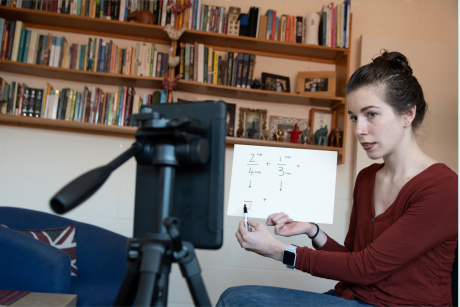
Lockdown lessons: Teaching and working during the Covid-19 crisis
Some of the lessons I learnt during the Covid lockdown, about staying sane, being mindful and engaging with technology
-

Finding a new path: Building affective online learning spaces for creative writing and arts practice
On Covid-19 related research, for the British Educational Research Association.
-
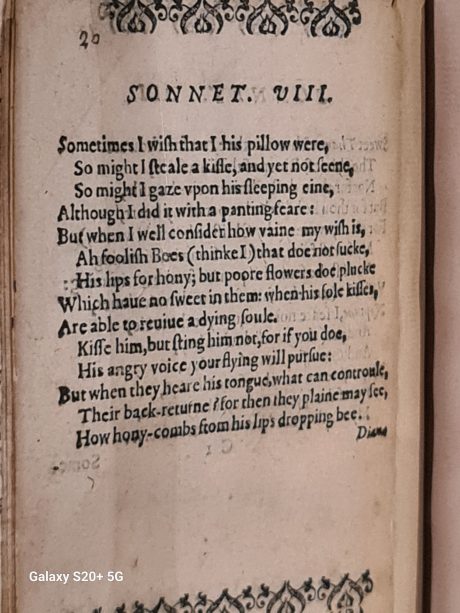
8 Ways To Teach spelling, punctuation and grammar
For many, teaching Spelling, Punctuation and Grammar (SPaG) is daunting. The stakes are high, and the weighting on SPaG in exams has raised anxieties. Here are some tried and tested approaches.
-
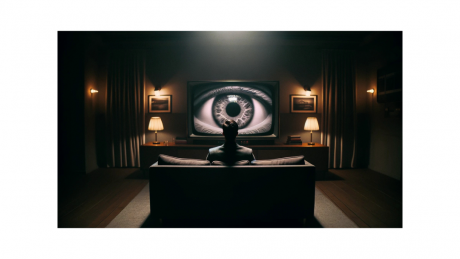
Teaching 1984 in the surveillance culture of schools
Teaching Orwell’s “1984” as a set text in an examination-obsessed and heavily surveilled school system.
-
Mindfulness and Creative Writing
How mindfulness can be used by creative writers to develop their practice and pedagogy
-

The Teachers’ Standards and English Teaching
Some interesting ideas about educating English teachers in relation to Teaching Standards set in 2012… However, these standards are less emphasized now than when I wrote this article.
-
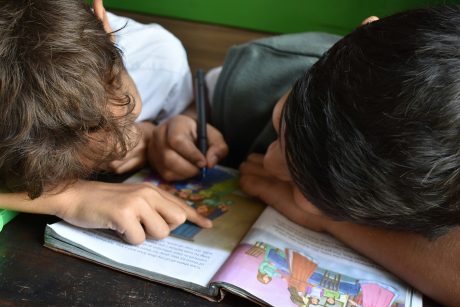
Riding the Reciprocal Teaching Bus. A teacher’s reflections on nurturing collaborative learning in a school culture obsessed by results
My interactions with the teaching strategy known as Reciprocal Teaching (or Reciprocal Reading), which involves students learning to read collaboratively in small groups.
-

Aesthetic literacy and autobiography
How I became ‘aesthetically literate’, and used other artistic work to educate and heal myself. ‘Aesthetic literacy’ may even be more important than other forms of literacy because of its therapeutic dimensions.
-

Mindfulness and English Teaching
Is English a mindful subject? How can mindfulness help English teachers teach their subject? I argue that awareness of the present moment can help learners appreciate the qualities of literature.
-

Dreaming of a Better World
A creative writing and reading project, carried out at Deptford Green school, which put the principles of Reciprocal Teaching into practice.
-
The Creative Writing Teacher’s Toolkit
There are certain pedagogical strategies, such as encouraging freewriting, using prompts and fostering flow which can significantly help learners to write creatively.
-

But sir, I lied – The value of autobiographical discourse in the classroom
The benefits of teachers using their own autobiographical writing in the classroom. The blurring of truth and fiction in autobiographical writing can provide students with the cloak of fiction when writing about their own lives
-

Aesthetic Learning, Creative Writing and English Teaching
‘Aesthetic learning’ can be helpful for English teachers, because we are all ‘aesthetic learners’: we learn to appreciate the qualities of the worlds we inhabit, whether actual or virtual.
-
Decolonising Creative Writing
You can access the PowerPoint for this lecture here. Please do not publish it without first gaining my consent. References •Begum, N., & Saini, R. (2019). Decolonising the Curriculum. Political Studies Review, 17(2), 196-201. •Crinson, M. (2003) Modern Architecture and the End of Empire. (Aldershot: Ashgate 2003) •Evaristo, B. (2020) The Long Form Patriarchs, and […]
-
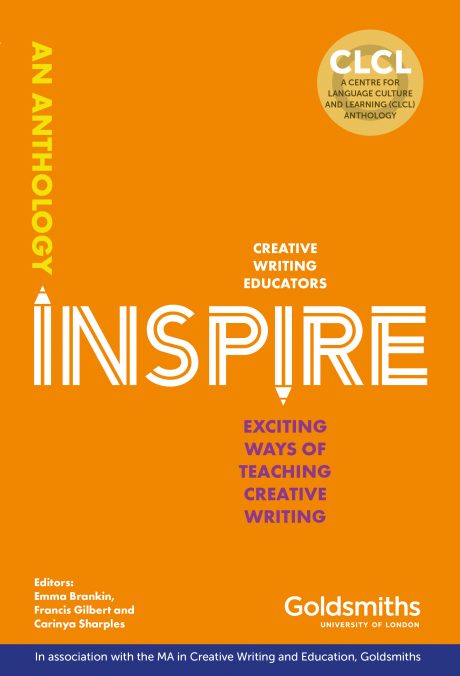
Inspire: Exciting Ways of Teaching Creative Writing
An anthology written by creative teachers with diverse experience. The focus is on how to teach creative writing in imaginative, practical and socially just ways, helping people of all ages and backgrounds to write.
-
Get a free copy of ‘Who Do You Love’ on audio here!
Blue Door Press is delighted to announce that the audiobook version of Who Do You Love (BDP 2017) is now available for sale on Audible, Amazon and iTunes. It was quite a journey working with the voice artist and actor Christopher James on the novel during this lockdown period. He and I talked quite intensely […]
-
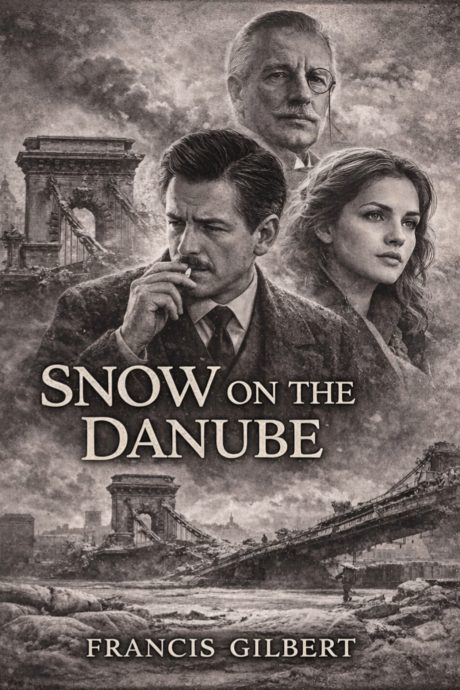
Snow on the Danube: a wartime thriller and romance
On a bitter winter morning, a young man stands on Budapest’s Chain Bridge, staring down at the Danube as snow melts into the river. He has lost everything. What stops him jumping is not hope, but the weight of an untold story. Snow on the Danube is a powerful, haunting novel that moves between modern day Budapest and the city’s darkest hours during the Second World War. When Béla Pongrácz inherits his great uncle’s manuscript, he discovers the hidden life of Count Zoltán Pongrácz, the last of a ruined Hungarian aristocratic family. Hypochondriac, musical and obsessively nostalgic, Zoltán grows up amid the splendour of Andrássy Avenue, the zoo, the circus and the Danube’s glittering banks. History soon tears that world apart. As fascism takes hold and Budapest becomes a city of disguises, cellars and shattered bridges, Zoltán is forced into acts of courage he never believed himself capable of, risking his life to save his adored sister Anna. His story is one of love, betrayal, survival and moral compromise. As Béla reads, past and present collide. What began as a legacy of words becomes a lifeline. Lyrical, darkly comic and deeply moving, Snow on the Danube is a novel about memory, inheritance and how stories can save us when we are closest to the edge.
-

My Dr Jekyll and Mr Hyde Audio Book is now published: free copies available, read more here!
A discussion about the creation of my audio book for my best selling study guide on the novel ‘The Strange Case of Dr Jekyll and Mr Hyde’.
topics I’ve written about on this site
- Archived (444)
- Creative Writers (17)
- Creative Writing Together AHRC Grant (2)
- FGI Publishing (34)
- Dr Jekyll & Mr Hyde: A dramatic adaptation of Stevenson's classic novel (2)
- Dr Jekyll & Mr Hyde: The Study Guide Edition (4)
- Far From The Madding Crowd: A Study Guide (2)
- Frankenstein: A Study Guide (2)
- How to Get a Great English Degree (2)
- Jane Eyre: A Study Guide (2)
- Learning Matters (2)
- Pride and Prejudice: A Study Guide (2)
- Songs of Innocence and Experience: A Study Guide (2)
- St. Cupid's (1)
- Star-crossed: Romeo and Juliet for Teenagers (2)
- The Hound of the Baskervilles: A Study Guide (2)
- The Long Game (6)
- The Mindful Creative Writing Teacher (2)
- The Mindful English Teacher (1)
- The Strange Case of Dr Jekyll and Mr Hyde: A Study Guide (2)
- The Turn of the Screw: A Study Guide (2)
- Wuthering Heights: A Study Guide (2)
- For (189)
- for academics (55)
- for parents (33)
- for students (97)
- for teachers (84)
- Therapists (13)
- Key concept (232)
- Academies (13)
- Admissions (5)
- Aesthetic autobiography (5)
- Analysing autobiography (4)
- Analysing quotation (5)
- Autobiographical classroom materials (4)
- Bullying (4)
- Child Language Acquisition (17)
- Choosing A Secondary School (3)
- Collective Identity (4)
- Communication (10)
- Comparison (5)
- Creative writing and therapy (8)
- Creative Writing Teaching (29)
- Curriculum change (8)
- Digital learning (6)
- Discipline (27)
- Education reform (59)
- English Baccalaureate (4)
- Free Schools (6)
- International comparisons of schools (2)
- Language Development (5)
- Media Studies (6)
- Mindfulness (8)
- Model answers (3)
- Ofsted (4)
- Punishments (4)
- Reading Reform (11)
- Resources (3)
- Reviews (13)
- School entrance (5)
- Semantic change (2)
- Specialist teachers (4)
- Student Voice (2)
- Teacher training (17)
- Teaching Unions (4)
- The Publishing Industry (13)
- Yob culture (12)
- Media appearances (35)
- BBC 2 Newsnight (2)
- BBC Breakfast (5)
- BBC News (2)
- BBC Radio3 (6)
- BBC Radio4 (5)
- BBC Radio5 Live (10)
- Channel 4 News (1)
- Channel 5 News (3)
- GMTV (2)
- ITV News (1)
- Sky News (1)
- Mindful Learning Podcast (9)
- My books (38)
- Anthologies (4)
- Fiction (4)
- Non-fiction (10)
- Study guides (17)
- Opinion (241)
- Book reviews (1)
- Drama reviews (1)
- Film and TV reviews (1)
- Published in (239)
- Academic articles (31)
- Blue Door Press (6)
- English Online (2)
- Local Schools Network (35)
- Long Game Articles (6)
- Mumsnet: talesbehindtheclasroomdoor (3)
- NAWE Magazine (2)
- Newsweek (1)
- Politico.eu (1)
- Reviews (1)
- Teachit.co.uk (1)
- The Big Issue (2)
- The Daily Mail and Mail on Sunday (8)
- The Daily Telegraph (24)
- The Evening Standard (3)
- The Guardian (43)
- Comment Is Free (29)
- The Local Schools Network (9)
- The New Day (1)
- The New Statesman (7)
- The Observer (4)
- The Tablet (1)
- The Times and The Sunday Times (33)
- The Times Educational Supplement (10)
- The Western Daily Press (6)
- The Yorkshire Post (4)
- Titles (31)
- UK education system (90)